P.J.: Que incluyan al Zepsyre en este Informe sobre el Mercado Global de Medicamentos , actuales y futuros , contra el Cáncer de Ovario 2017 a 2021 ... es un paso al frente en el camino al Mercado de dicho Farmaco y que refuerza la visión y estrategia que tuvo Chugai ( Filial de la Suiza ROCHE ) al Firmar un Acuerdo con PharmaMar para intentar Comercializar dicho Farmaco en Japón y que tiene un Monto de 30 Millones ya en la Caja de PharmaMar más otros 100 Millones que pagara Chugai conforme se vayan cumpliendo Hitos .
**************************************
 08-07-2017 - Health & Medicine .
El Mercado Global de Medicamentos contra el Cáncer de Ovario se espera que llegue a US $ 3.8 mil millones en 2021, creciendo constantemente en CAGR 20.5% durante el período de previsión 2017-2021, debido principalmente a la continua absorción y esperado lanzamiento de los inhibidores de PARP aprobados, La larga duración del tratamiento y el gran número de oportunidades de tratamiento en el entorno avanzado de primera línea.
08-07-2017 - Health & Medicine .
El Mercado Global de Medicamentos contra el Cáncer de Ovario se espera que llegue a US $ 3.8 mil millones en 2021, creciendo constantemente en CAGR 20.5% durante el período de previsión 2017-2021, debido principalmente a la continua absorción y esperado lanzamiento de los inhibidores de PARP aprobados, La larga duración del tratamiento y el gran número de oportunidades de tratamiento en el entorno avanzado de primera línea.
...
Los principales actores que operan en el mercado mundial de drogas para el cáncer de ovario y perfilados en este informe incluyen AbbVie, AstraZeneca (Acerta Pharma), Boehringer Ingelheim GmbH, Five Prime Therapeutics, Gradalis, Incyte Corporation, MacroGenics, Mateon Therapeutics, Merck KGaA, Novartis, Novogen, Inc., Oasmia Pharmaceuticals, Pfizer, Inc., PharmaMar (Chugai) y Roche (Genentech).
...
P.J. : Un mes justo para la celebración del Congreso ,Oncologico , ESMO en Madrid en el que se presentaran Novedades , Avances , Espectativas ...
PharmaMar por su parte presentara Datos del Ensayo de Fase III con su Farmaco Zepsyre para el Tratamiento de Cáncer de Pulmón de Celulas Pequeñas ( SMCL ) . A finales de Agosto sabremos si la Biotecnologica presentara más novedades sobre este Farmaco u otros Farmacos de su Pipeline en ESMO-Madrid-2017 .
 MADRID, 3 Ago. (EUROPA PRESS) -
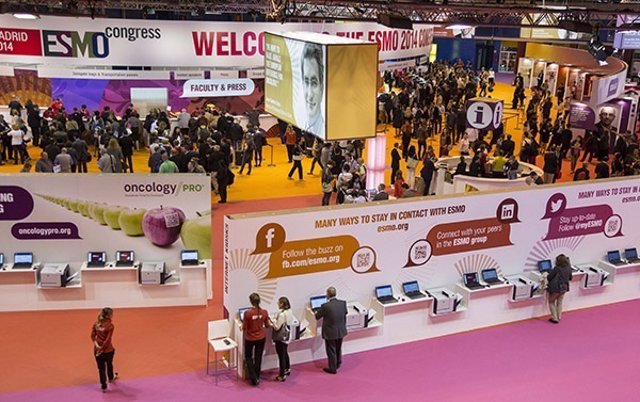
El Congreso de Oncología ESMO 2017, que volverá a acoger Ifema del 8 al 12 de septiembre, reunirá en Madrid a más de 20.000 científicos, investigadores y profesionales clínicos para compartir los últimos avances contra el cáncer Tras su celebración en Madrid en 2014, Ifema será nuevamente sede del Congreso Europeo de Oncología.
Este Congreso organizado por la European Society for Medical Oncology (ESMO), en colaboración con la European Association for Cancer Research (EACR) es uno de los encuentros más prestigiosos e influyentes de esta especialidad médica a nivel internacional.
El objetivo es facilitar la interacción y el intercambio de conocimientos. Uno de sus propósitos es la integración de la ciencia y el entorno clínico para contribuir a salvar la brecha entre la innovación en la investigación y la implementación clínica, y así obtener los mejores resultados en los tratamientos de cáncer.
La colaboración entre ESMO y EACR es "vital" en momentos en los que se requiere una comprensión profunda de la biología molecular que subyace al desarrollo del cáncer. De ahí que, la integración de la ciencia en la oncología sea el objetivo general de ESMO 2017 ESMO ha elegido de nuevo Madrid e Ifema para la celebración de su congreso, tras su paso en 2014. En su edición en Madrid reunió a 20.000 delegados, de los cuales el 80 por ciento eran extranjeros y generaron unos ingresos estimados de más de 20 millones de euros, y además de 75.000 pernoctaciones .
...
 Estamos Trabajando en Crear una Red Comercial en EEUU . No solo para Vender el Zepsyre sino tambien los Farmacos que vendrán Después .
Martes 1 de Agosto de 2017 | Xema Aguiar (AGN) .
*.- PharmaMar a traves del Nuevo Director de Operaciones en EEUU , Pascal Besman , esta llevando a cabo una labor de incrementar la visibilidad de la Compañia entre los " Stakeholders " : Oncólogos , Pacientes , Inversores , etc .
Estamos Trabajando en Crear una Red Comercial en EEUU . No solo para Vender el Zepsyre sino tambien los Farmacos que vendrán Después .
Martes 1 de Agosto de 2017 | Xema Aguiar (AGN) .
*.- PharmaMar a traves del Nuevo Director de Operaciones en EEUU , Pascal Besman , esta llevando a cabo una labor de incrementar la visibilidad de la Compañia entre los " Stakeholders " : Oncólogos , Pacientes , Inversores , etc .
*.- Esperamos en esta Segunda mitad del año la respuesta por parte de EMA y la CEE sobre la Autorización de Comercialización del Segundo Farmaco de PharmaMar APLIDIN para el tratamiento de Myeloma Multiple . De ser positiva la respuesta ... Aplidin estaría en el Mercado en 2018 .
*.- Zepsyre es el Tercer Farmaco de la Compañia . Se esperan en Breve los primeros resultados de la Fase III en Ovario ... que de ser Positivos servirían para presentar el Dossier para solicitar su entrada al Mercado . Con este Farmaco tambien se llevan a cabo ensayos de Fase III ya en curso en Pulmón ... y por empezar tambien la Fase III en Endometrio y Mama .
*.- Yondelis . En breve se cumpliran 10 años desde su salida al Mercado Europeo para Tratamiento de Sarcomas ... más tarde tambien fue aprobado para Ovario . Se calcula que son alrededor de 50.000 los pacientes tratados con el Farmaco en estos 10 años . En 2015 Yondelis tambien fue aprobado en EEUU y Japón para Tratamiento de Sarcomas ... queda pendiente aún su posible aprobación en Ovario en ambos Paises .
 *.- Con la Aprobación del Yondelis ( Primer Farmaco Oncologico Mundial de origen Marino en salir al Mercado ) ... el Sector vio que en el Mar podría existir una linea de I+D no contemplada y a fecha de hoy son bastantes las Biotecnologicas que han enfocado su I+D al Mar ... por suerte PharmaMar les lleva años , experiencia , 200.000 Moleculas y más de 1600 Patentes ... ¡¡ De Ventaja !! .
*.- Salir al Nasdaq continua en Nuestra Hoja de Ruta ... Estamos Preparados para Ello ... y lo Haremos en cuanto tengamos la Ventana de Oportunidad . ( Blanco y en Botella ) .
*.- En lo que queda de año presentaremos e iniciaremos la I+D con el Quinto Farmaco de la Compañia .
...
Accepted July 28, 2017.// Copyright ©2017, American Association for Cancer Research.
Amy Barone, Dow-Chung Chi, Marc R. Theoret, Huanyu Chen, Kun He, Dubravka Kufrin, Whitney S. Helms, Sriram Subramaniam, Hong Zhao, Anuja Patel, Kirsten B. Goldberg, Patricia Keegan and Richard Pazdur
Abstract
On October 23, 2015, the U.S. Food and Drug Administration approved trabectedin, a new molecular entity for the treatment of patients with unresectable or metastatic liposarcoma or leiomyosarcoma who received a prior anthracycline-containing regimen.
Approval was based on results of a single, randomized, active-controlled, 518-patient, multicenter study comparing the safety and efficacy of trabectedin 1.5 mg/m2 as a 24-hour continuous intravenous (i.v.) infusion once every 3 weeks to dacarbazine 1000 mg/m2 i.v. once every 3 weeks.
Treatment with trabectedin resulted in a statistically significant improvement in progression-free survival (PFS) of 4.2 months and 1.5 months for trabectedin and dacarbazine, respectively. (HR= 0.55; 95% CI: 0.44, 0.70; unstratified log-rank test p = 0,001 .
The most common adverse reactions ( 20%) were nausea, fatigue, vomiting, constipation, decreased appetite, diarrhea, peripheral edema, dyspnea, and headache.
Serious adverse reactions included anaphylaxis, neutropenic sepsis, rhabdomyolysis, hepatotoxicity, cardiomyopathy, and extravasation resulting in tissue necrosis.
A post-marketing trial was required to evaluate the serious risk of cardiomyopathy. This approval provides another treatment option in a setting where no drug has been shown to improve overall survival.
A key regulatory consideration during review of this application was use of PFS as an endpoint to support regular approval of trabectedin.
Las Limitaciones de las Terapias Estrella contra el Cáncer.
Daniel Mediavilla / El Pais / 2 agosto 2017 .
La revista de 'The Lancet' publica un editorial en el que advierte ante la 'fiebre del oro' en torno a las inmunoterapias .
... El artículo también señala las limitaciones de las inmunoterapias. Por un lado, “muchos de los antiguos ensayos, tras al menos cinco años de seguimiento, están descubriendo una serie de efectos secundarios poco frecuentes que requieren intervenciones de apoyo diferentes”, afirman. “Estos hallazgos enfatizan la importancia de acumular una cantidad suficiente de información antes de poner en marcha un nuevo estudio, especialmente si combina varias terapias inmunes cada una con características de seguridad desconocidas”.
Por último, resaltan que, aunque la respuesta de algunos tumores ante este tipo de tratamientos es extraordinaria, los estudios a largo plazo muestran que la mayoría de los pacientes fallecen a causa de la enfermedad. Uno de estos estudios, en el que se empleó ipilimumab, el fármaco que inició la revolución de la inmunoterapia, muestra que la tasa de supervivencia 5 años después del tratamiento es del 18,2%, lo que significa que el 80% de los enfermos no tuvo buenos resultados a largo plazo.
“Aunque se anuncie una tentadora oportunidad de tratamiento, es esencial tener en cuenta que la actual generación de inmunoterapias solo alarga la vida de un pequeño porcentaje de pacientes”, aseveran.
Esto, sostienen, debería reducir el uso de algunos de estos fármacos contra tipos de cáncer para los que no han sido aprobados, algo que se hace y puede dar “falsas esperanzas”, y limitar la inversión para una sola línea de investigación mientras se olvidan otras con potencial.
...
La hija de Amancio Ortega y Rosalía Mera sigue incrementando sus inversiones en ladrillo.
R. S. // REDACCIÓN / LA VOZ 03/08/2017.
Rosp Corunna, el grupo empresarial de Sandra Ortega Mera, cerró el pasado ejercicio con un beneficio de casi 90 millones de euros (89,6 millones en concreto), una ganancia algo inferior a la del 2015 (105 millones).
En esa caída del beneficio tiene que ver el mayor volumen de inversión realizado en el 2016: 541 millones entre inmuebles, hoteles, oficinas, naves industriales o aparcamientos.
El grupo de la segunda mayor fortuna de España, con sede en A Coruña, fundamenta su negocio en dos vías. El primero, los dividendos que le reportan sus participaciones en empresas, sobre todo en Inditex, donde es la segunda mayor accionista (tiene el 5 %), pero también en cadenas de hoteles (Room Mate) o firmas Biotecnológicas como Pharmamar ( 5% ).
Esa vía, la de los dividendos, le reportó el año pasado 110 millones de euros, 13 más que en el 2015, según la memoria anual que acaba de entregar en el Registro Mercantil.
...
1 Agosto 2017 .
 Phase III Atlantis is a Clinical Study that tries to get the Efficacy of a Combination of Lurbinectedin plus Doxorubicin in Patients wil Small-Cell Lung Cancer.
The Renowned Oncologist Dr. Paz Ares tell us about it, saying that the main objective of this study is to improve the progression free-survival (PFS) of those patients, to provice some new hope and better quality of life to our patients.
 IÑAKI PARDO TORREGROSA, Barcelona // 01/08/2017 .
Barcelona competirá con otras 18 ciudades, entre ellas Ámsterdam, Atenas, Bruselas, Dublín o Milán, por tener la sede de la Agencia Europea del Medicamento (EMA, por sus siglas en inglés) cuando deje Londres por el Brexit, según la lista de candidatas publicada este martes por el Consejo de la Unión Europea. También luchan por hacerse con esta agencia Bonn, Bratislava, Bucarest, Copenhage, Helsinki, Lille, Oporto, Sofía, Estocolmo, Malta, Viena, Varsovia y Zagreb.
...
JOSEP CORBELLA, Barcelona // 02/08/2017 .
 Según los resultados presentados en el European Journal of Cardio-Thoracic Surgery, cuando a Blat se le presenta una muestra de aliento de una persona con cáncer de pulmón, acierta en el 95% de los casos, incluso si el cáncer es tan incipiente que sólo mide cuatro milímetros de diámetro.
Cuando se le presenta una muestra de una persona que no tiene cáncer, acierta en el 98% de los casos, incluso si se trata de un paciente con otra enfermedad respiratoria.
...
 Un grupo de investigadores de la Universidad de Kent (Ohio) han descubierto por primera vez signos de la enfermedad de Alzheimer en 20 cerebros de chimpancés ancianos. El hallazgo, que convierte en mito el debate sobre si son los seres humanos la única especie capaz de desarrollar la enfermedad, podría ayudar a comprender mejor la dolencia y cómo combatirla.
...
EL GLOBAL Madrid | 01 ago 2017 .
 La Comisión Europea ha autorizado el uso de bevacizumab, registrado por Roche con el nombre de ‘Avastin’, en combinación con las quimioterapias carboplatino y paclitaxel, seguido por este fármaco solo, para el tratamiento de mujeres con cáncer de ovario sensibles a platino que han recaído.
Bevacizumab ya estaba aprobado en Europa para mujeres con cáncer de ovario sensibles a platino, en combinación con las quimioterapias gemcitabina y carboplatino, y esta aprobación amplía la indicación para incluir la combinación de carboplatino y paclitaxel.
...
Esta aprobación se ha basado en los resultados del amplio estudio ‘GOG-0213’ fase III que demostró que la combinación de Bevacizumab con quimioterapia con carboplatino y paclitaxel mostró un beneficio de supervivencia global de cinco meses en comparación con la quimioterapia sola.
 TOKYO, July 31, 2017 --
Chugai Pharmaceutical Co., Ltd. (TOKYO: 4519) announced that the signing of a joint research agreement with the National Cancer Center Japan regarding the "MASTER KEY Project," an industry-academia joint project led by the National Cancer Center Japan. Chugai will collaborate with the National Cancer Center Japan to promote drugs research and development on rare cancers and genomic medicines.
Rare cancers are defined as cancers with a prevalence of fewer than six cases out of a population of 100,000 persons per year*. As there are an extremely small number of patients and there are more issues related to diagnosis and therapies compared to other types of cancers, there is no consolidated clinical data making it difficult to conduct research, development and clinical studies on these types of cancers.
*http://www.ncc.go.jp/jp/cis/divisions/06health_s/files/06health_s_work.pdf (Japanese only)
This project was started in May 2017 with the aim of integrating the advanced know-how, research support functions of the National Cancer Center Japan, and the seeds and development strategies of pharmaceutical companies to build a joint foundation for industry-academia to comprehensively and efficiently promote the development of therapies for rare cancers.
...
Por E.B. // Lunes 31 de julio del 2017.
 Pharmamar figura entre las recomendaciones de Óscar Germade que sostiene que la superación de los 4,40 euros confirmaría una “figura de vuelta completa” en el grado mayor, y por tanto una cambio de tendencia principal, cuyo objetivo teórico estaría situado al menos en los 7 euros.
“En el corto plazo, el precio se encuentra inmerso en un proceso de consolidación tipo menor, que se resolvería con la superación de los 4,255 euros”, añade Germade. En tal caso -explica- la tendencia intermedia volvería a reanudarse, y teniendo en cuenta, que el objetivo teórico de esa consolidación estaría situado en 4,75 euros podríamos dar por hecho el cambio de tendencia antes mencionado. “Tomaríamos como referencia para el cierre/reducción de posiciones la media de 200 sesiones, que actualmente pasa por los 3,15 euros”, concluye.
10-Year Trabectedin Real-World Data Demonstrate Efficacy in Sarcoma.

Jason Harris.
Published Online: Wednesday, Jul 26, 2017.
Long-term follow-up showed that trabectedin (Yondelis) was associated with high rates of survival and clinical benefit rate for patients with advanced high grade soft tissue sarcomas, especially liposarcoma and leiomyosarcoma.
In a poster presented at the 2017 ASCO Annual Meeting, Sivan Shamai, MD, and Ofer Merimsky, MD, with the Tel Aviv Medical Center and Sackler School of Medicine found that patients with liposarcoma treated with trabectedin had a median overall survival (OS) of 11 months (range, 1-63), and patients with leiomyosarcoma had a median OS of 15 months (range, 1-35).
“In contrast to former trials, our retrospective data represents real-life experience with trabectedin, and includes patients with diverse age, histology, performance status, prior treatments and tumor burden,” wrote Shamai and Merimsky. “Trabectedin is a safe and effective drug in advanced high-grade STS. Further research is needed to identify which patients will benefit most.”
Shamai and Merimsky reviewed real-life experience data on 86 patients with high-grade soft tissue sarcomas collected over 10 years. Patients with liposarcoma (46%) and leiomyosarcoma (43%) were treated with 1.5 mg/m2 of trabectedin once every 3 weeks until progression. Patients received a median of 5 cycles of treatment, with a total of 703 cycles administered.
 Trabectedin was delivered as first-line (11.62%), second-line (53.48%), third-line (25.58%), and fourth-line therapy (9.3%). Investigators said there was no statistically significant difference in OS or progression-free survival (PFS), when assessed by treatment line.
The FDA approved trabectedin in 2015 for patients with unresectable or metastatic soft tissue sarcoma who previously received anthracycline-containing chemotherapy. The approval was based on results from the phase III ET743-SAR-3007 trial comparing trabectedin with dacarbazine. Trabectedin was shown to reduce the risk for disease progression by 45% versus dacarbazine in patients with advanced soft tissue sarcoma.
The open-label, multicenter, phase III SAR-3007 trial recruited 518 patients with liposarcoma and leiomyosarcoma who previously received an anthracycline-containing regimen followed by at least one additional line of chemotherapy. The protocol required patients to have an ECOG performance status of 0 or 1. The study was conducted at 85 sites in four different countries, but 94% of the patients were enrolled in the United States.
 In the dacarbazine arm, 13.3% of patients (n = 23) had one prior line of chemotherapy, 43.4% (n = 75) had two prior lines, and 43.4% (n = 75) had three or more prior lines. Among patients receiving trabectedin, the rates were 11.0% (n = 38), 46.4% (n = 160), and 42.6% (n = 147), respectively. Additionally, the median time to randomization from the last disease progression was <1 month in both arms .
After 329 PFS events, patients receiving trabectedin had a statistically significant reduction in the risk of disease progression, with a median PFS of 4.2 months versus 1.5 months with dacarbazine (HR, 0.55; 95% CI, 0.44-0.70; P <.001). The 3-month PFS rates were 56% versus 34% for the two arms, respectively, and the 6-month PFS rates were 37% versus 14%. The PFS benefit with trabectedin was observed across preplanned subgroups, including patients with leiomyosarcoma and liposarcoma.
In the dacarbazine arm, 13.3% of patients (n = 23) had one prior line of chemotherapy, 43.4% (n = 75) had two prior lines, and 43.4% (n = 75) had three or more prior lines. Among patients receiving trabectedin, the rates were 11.0% (n = 38), 46.4% (n = 160), and 42.6% (n = 147), respectively. Additionally, the median time to randomization from the last disease progression was <1 month in both arms .
After 329 PFS events, patients receiving trabectedin had a statistically significant reduction in the risk of disease progression, with a median PFS of 4.2 months versus 1.5 months with dacarbazine (HR, 0.55; 95% CI, 0.44-0.70; P <.001). The 3-month PFS rates were 56% versus 34% for the two arms, respectively, and the 6-month PFS rates were 37% versus 14%. The PFS benefit with trabectedin was observed across preplanned subgroups, including patients with leiomyosarcoma and liposarcoma.
Additionally, the PFS benefit was confirmed by an independent review of radiographic PFS.
ORR was 9.9% with trabectedin and 6.9% with dacarbazine. The clinical benefit rates (partial response, complete response, or stable disease ≥18 weeks) were 34.2% and 18.5% in the two arms, respectively (P = .0002). The median time to response and duration of response were 3.07 and 6.47 months, respectively, with trabectedin and 2.35 and 4.17 months with dacarbazine.
The median OS was 13.7 months with trabectedin versus 13.1 months with dacarbazine (HR, 0.93; 95% CI, 0.75-1.15; P = .49).
About 56% of dacarbazine patients received post-protocol anticancer treatments compared with 47.0% of patients in the trabectedin arm. Several of the treatments, including pazopanib, gemcitabine, docetaxel, and other drugs, as well as radiation and surgery were used more commonly in the dacarbazine arm.
There were no unexpected toxicities with either of the treatments. All-grade adverse-event (AE) rates were 99.1% and 98.1% in the trabectedin versus dacarbazine arms, respectively, with grade 3/4 AE rates of 76.2% versus 51.6%.
The most commonly reported all-grade AEs with trabectedin versus dacarbazine were nausea (73% vs 49%), fatigue (67% vs 51%), neutropenia (49% vs 29%), increased ALT levels (45% vs 6%), vomiting (44% vs 21%), anemia (39% vs 29%), constipation (36% vs 28%), increased AST levels (35% vs 5%), and diarrhea (34% vs 23%).
Grade 3 AEs with the highest frequency in the trabectedin arm were increased ALT levels (25% vs 1%), neutropenia (21% vs 11%), anemia (14% vs 11%) and increased AST levels (12% vs 0%). Sixteen percent of patients receiving trabectedin had grade 4 neutropenia compared with 10% in the dacarbazine group.
Imfinzi No logra Mejorar los Resultados de un Tratamiento con Quimioterapia .
Forbes , 27 Julio 2017 // Acciones de AstraZeneca se desploman por experimento fallido .
La caída de sus títulos reduce su valor en bolsa en cerca de 10,000 mde y borra todas las alzas que había acumulado desde el inicio del año.
 La falla en un experimento contra el cáncer desplomó las acciones de la farmacéutica AstraZeneca cayeron más del 15% en las primeras operaciones, y se encaminan a su peor día a la fecha.
Una combinación de dos fármacos inyectables de inmunoterapia no ayudó a los pacientes como se esperaba, reveló un estudio -conocido como MYSTIC- sobre cáncer avanzado de pulmón.
El experimento clínico era el más esperado en la industria farmacéutica este año.
A las 7:45 horas, tiempo de México, los títulos de la farmacéutica perdía un 15.97% en la Bolsa de Londres, respecto a su cierre previo. Hasta ayer, la empresa mantenía una capitalización bursátil de 64,000 millones de libras, unos 72,000 millones de euros.
Esto representa un descalabro para AstraZeneca, ya que reduce su valor en bolsa en cerca de 10,000 mde y borra todas las alzas que había acumulado desde el inicio del año.
De acuerdo con los resultados iniciales de MYSTIC, la combinación de durvalumab y tremelimumab no era más efectiva para detener el avance de la enfermedad que la quimioterapia en pacientes que manifestaban una proteína llamada PD-L1 en un 25% o más de sus células cancerosas.
El estudio clínico era visto como clave para probar el valor de los nuevos productos del grupo y su futuro como una firma independiente, después de que rechazó un intento de adquisición de 118.000 millones de dólares por parte de Pfizer en el 2014.
Agosto siempre es un mes atipico por excelencia ... Pero esta ahi y hay que pasarlo.
 *.- Este año viene con unos resultados positivos del Primer Semestre asi como el EBITDA .
*.- 42 Millones en Caja .
*.- Una Deuda bien controlada y saneada .
*.- EDISON nos acaba de subir el Precio Objetivo hasta los 7,56 euros . Lo que viene ha significar que valora a Pharma Mar en 1680 Millones de Euros .
*.- EDISON tambien deja claro que si ZEPSYRE consigue batir al Topotecan en la Fase III Ovario ... subira el Precio Objetivo hasta los 8,36 euros.
*.- Si miramos lo que hizo Pharma Mar en Agosto del 2016 ... nos encontramos con que se revalorizo un 22 % .
*.- Y ademas la primera semana de septiembre Pharma Mar asistira al Congreso ESMO en donde presentara los resultados intermedios de la Fase III del Zepsyre en PULMON .
Asi que Desearos unas Buenas Vacances y Salut .
HITOS JUNIO 2017 :
*.- Los ingresos totales del Grupo se incrementan un 5,2% con respecto al mismo periodo del ejercicio anterior.
 *.- En relación con el contrato de licencia suscrito por Pharma Mar con Specialised Therapeutics Asia PTE., LTD, que se describe en el segundo punto de Oncología, PharmaMar amplió su capital social con la emisión de nuevas acciones representativas del 0,2% del capital social, a un precio de suscripción equivalente al 130% de la media simple de los precios medios ponderados de cotización bursátil de la acción de PharmaMar en las 20 sesiones anteriores a la firma del Contrato de licencia.
Oncología :
 *.- PharmaMar celebró en el mes de abril Nueva York una jornada científica (R&D Day).
*.- PM1183 (lurbinectedina) ya tiene nombre comercial: Zepsyre.
*.- PharmaMar suscribió un contrato de licencia y comercialización con la compañía Specialised Therapeutics Asia PTE., LTD de Singapur en relación con la comercialización del antitumoral de origen marino de la Sociedad lurbinectedina (PM1183), para el tratamiento del cáncer de ovario resistente a platino, cáncer de pulmón microcítico, cáncer de mama metastásico BRCA 1/2 y otras posibles indicaciones terapéuticas, en Australia, Nueva Zelanda y 12 países asiáticos más.
*.- PharmaMar celebró en el mes de abril Nueva York una jornada científica (R&D Day).
*.- PM1183 (lurbinectedina) ya tiene nombre comercial: Zepsyre.
*.- PharmaMar suscribió un contrato de licencia y comercialización con la compañía Specialised Therapeutics Asia PTE., LTD de Singapur en relación con la comercialización del antitumoral de origen marino de la Sociedad lurbinectedina (PM1183), para el tratamiento del cáncer de ovario resistente a platino, cáncer de pulmón microcítico, cáncer de mama metastásico BRCA 1/2 y otras posibles indicaciones terapéuticas, en Australia, Nueva Zelanda y 12 países asiáticos más.
*.- PharmaMar presenta en la reunión anual de la Sociedad americana de Oncología Clínica (ASCO) los resultados del ensayo clínico de Lurbinectedina (PM1183) en cáncer de endometrio avanzado.
Diagnóstico :
 *.- La FDA coreana ha dado aprobación para comercialización del kit de diagnóstico CLART® HPV (Papilomavirus Humano) .
RNA Interferencia :
*.- Inicio del estudio clínico de fase III (HELIX) con SYL1001 para la indicación de síndrome de ojo seco .
 Química de Gran Consumo :
*.- El segmento de Química de Gran Consumo ha incrementado sus ventas netas en este periodo en un 7% .
Ingresos totales del Grupo :
Por lo que respecta a las ventas netas del área de Biofarmacia, éstas ascienden a 46,5 millones de euros (49,4 millones de euros a junio 2016). Del total de ventas de este área, 43,3 millones corresponden al segmento de Oncología (PharmaMar) por las ventas de Yondelis® (45,7 a junio de 2016). El segmento de Diagnóstico (Genómica) ha alcanzado unas ventas de 3,2 millones de euros, 3,6 millones en el mismo periodo del ejercicio anterior.
En cuanto a las ventas de las compañías del Sector Química de Gran Consumo, éstas ascienden a 42,2 millones de euros (39,3 millones a junio 2016), un incremento del 7,3% con respecto al mismo periodo del ejercicio anterior.
 En lo que se refiere a los ingresos procedentes de royalties, licencias y otros acuerdos de co-desarrollo, éstos pertenecen en su totalidad al segmento de Oncología. Los ingresos por royalties recibidos de Janssen Products y Taiho Pharmaceutical Co por la venta de Yondelis® en Estados Unidos, Japón y resto del mundo excepto la Unión Europea, ascienden 2,8 millones de euros en junio 2017. Por otro lado, a junio de 2017 los ingresos procedentes de licencias y otros acuerdos, han alcanzado los 5,4 millones de euros y se corresponden en primer lugar con el reconocimiento del grado de avance en el primer trimestre del año, de los ensayos clínicos contemplados en el acuerdo de licencia, desarrollo y comercialización firmado en diciembre de 2016 con Chugai Pharma Marketing Ltd para Zepsyre (PM1183). Este acuerdo contemplaba un pago inicial de 30 millones de euros (recibidos el 17 de enero de 2017), que se irán reconociendo como ingresos en la cuenta de resultados en función del grado de avance de los ensayos clínicos comprometidos por PharmaMar, por importe de 4,7 millones de euros y en segundo lugar a un nuevo contrato de licencia de aplidina para Turquía firmado con Eczacibasi en 2016 por importe de 0,5 millones de euros y por último corresponde al nuevo contrato de licencia firmado con Specialized Therapeutics Asia Pte Ltd (STA) sobre Zepsyre para Nueva Zelanda y doce países asiáticos más por importe de 0,2 millones de euros. A junio 2016 se habían registrado en concepto de cobros por hitos procedentes de acuerdos de licencia 229 miles de euros.
Tesorería y Deuda :
 El efectivo y equivalentes sumado a las inversiones financieras corrientes y no corrientes, alcanza los 42,1 millones de euros (33,5 a 31 de diciembre de 2016). La deuda financiera total del Grupo (corriente y no corriente) asciende en junio de 2017 a 103,7 millones de euros (95,5 millones de euros en diciembre 2016). La Sociedad a 30 de junio ha contratado nuevos préstamos a largo plazo por importe de 13 millones de euros y ha amortizado préstamos bancarios y con organismos oficiales por importe de 8,3 millones de euros.
Pipeline Oncologico :
Yondelis , Aplidin y Zepsyre va todo según lo Previsto e incluso Mejor .
A Destacar el PM184 en que se le ha visto actividad en nuevas Indicaciones Oncologicas :
El estudio fase I de escalada de dosis que evalúa la combinación de PM184 con gemcitabina continua el reclutamiento según lo previsto. Este estudio se está realizando en 2 centros uno en España y otro Estados Unidos. Está previsto orientar la inclusión de pacientes a enfermedades específicas en las que se ha observado beneficio clínico; como Cáncer de Pulmón de Células No Microciticas, Cáncer de Mama y Tumores de Cabeza y Cuello.
Sylentis :
 Respecto al compuesto SYL1001 para el tratamiento del síndrome de ojo seco ha comenzado un estudio clínico de Fase III llamado Helix para el que se había obtenido la autorización favorable a iniciar el ensayo clínico por parte de las autoridades regulatorias de España, Portugal y Estonia. Se ha iniciado el reclutamiento de los pacientes al ensayo
clínico reclutándose el primer paciente el 30 de mayo. El reclutamiento avanza conforme a lo esperado.
Respecto al compuesto SYL1001 para el tratamiento del síndrome de ojo seco ha comenzado un estudio clínico de Fase III llamado Helix para el que se había obtenido la autorización favorable a iniciar el ensayo clínico por parte de las autoridades regulatorias de España, Portugal y Estonia. Se ha iniciado el reclutamiento de los pacientes al ensayo
clínico reclutándose el primer paciente el 30 de mayo. El reclutamiento avanza conforme a lo esperado.
Para el producto Bamosiran para el tratamiento del glaucoma se ha continuado con el desarrollo de combinaciones de este producto con el fármaco comercial latanoprost.
 27 de julio de 2017, tendrá lugar una Teleconferencia en inglés para analistas e inversores, a las 14:00 CET (8:00 ET) para comentar los resultados del Grupo Pharma Mar correspondientes al primer semestre del año 2017.
Los números de la teleconferencia son 877-407-3102 (desde EE.UU. o Canadá) o 201-493-6790 (desde otros países) y 900 834 236 para España.
Los interesados en seguir la teleconferencia en vivo a través de la web podrán visitar el apartado de Calendario de Eventos de la página web de la compañía, www.pharmamar.com, y hacer clic en el enlace de la webcast.
Se podrá acceder a la grabación de la teleconferencia en la página web de PharmaMar durante los 30 días siguientes visitando el apartado de Calendario de Eventos de www.pharmamar.com .
The Group´s income of 97 M€ for the first half 2017 grew
5.2% and EBITDA has also improved respectively.
PharmaMar has continued to improve efficiency, with
operative costs being reduced by 2.3% .
El Grupo Pharma Mar Aumenta sus Ingresos un 5,2% en el Primer semestre hasta alcanzar los 97 millones de euros .
*.- Los Ingresos Registrados por los Royalties pagados por J&J y Taiho más los procedentes de acuerdos de licencia alcanzan la cifra de 8,1 Millones de Euros .
*.- El EBITDA del Grupo se mantiene positivo en estos seis meses del 2017 .
 *.- Continúa la contención de costes del grupo, los gastos operativos disminuyen un 2,3% .
Madrid, 26 de Julio del 2017 :
El Grupo Pharma Mar (MSE: PHM) ha Registrado unos ingresos totales durante la primera mitad del 2017 de 96,9 millones de euros, que supone un incremento de un 5,2% con respecto al mismo periodo del año anterior.
El total de ingresos de Oncología crece un 4,8% durante los primeros seis meses del 2017 hasta los 51,4 millones de euros. Este resultados recoge las ventas de Yondelis®, que han sido de 43,3 millones de euros, y los ingresos registrados por royalties y los procedentes de acuerdos de licencia.
Por su parte, las ventas del sector de Química de Gran Consumo han registrado, hasta 30 de junio, un incremento del 7,3% hasta los 42,17 millones de euros.
A cierre del primer semestre de 2017 el EBITDA ajustado del grupo mejora hasta los 80.000 euros desde los -5,6 millones de euros que se registraron en el mismo periodo del año anterior. Esta considerable mejora se ha debido al incremento de ingresos totales del grupo y a la contención de gastos operativos (I+D, Marketing y Comercial, administración, y otros de explotación), que disminuyen un 2,3 % en el primer semestre del año.
Todo ello teniendo en cuenta que la compañía está cumpliendo con el calendario estimado de sus ensayos clínicos.
Actualmente PharmaMar está a la espera de conocer a principios del próximo año los resultados del ensayo de fase III con Zepsyre® en cáncer de ovario resistente a platino.
Continúa igualmente el reclutamiento de pacientes del ensayo de fase III también con Zepsyre® en cáncer de pulmón microcítico y durante el último trimestre del año se espera iniciar un nuevo ensayo en fase III con este mismo compuesto para el tratamiento de cáncer de mama en BRCA 2.
Asimismo, PharmaMar espera para el último trimestre la respuesta del CHMP sobre la aprobación para comercialización de Aplidin® en Europa para el tratamiento de Mieloma múltiple.
Con todo ello, el grupo ha mejorado su resultado neto atribuible, durante este primer semestre de 2017, con una cifra de -7,3 millones frente a los -13,1 millones en el mismo periodo del año anterior.
 Fecha: jueves, 27 de julio 2017.
Matthew Harlow.
Tema: "Optimización de la terapia con Trabectedin para el Tratamiento del Sarcoma de Ewing".
Departamento: Patrick Grohar Laboratory .
A Patient-Derived Orthotopic Xenograft (PDOX) Model of a Cisplatinum-Resistant Osteosarcoma Lung Metastasis that was Sensitive to Temozolomide and Trabectedin : Implications for Precision Oncology.
 Lgarashi K1,2,3, Murakami T1,2, Kawaguchi K1,2, Kiyuna T1,2, Miyake K1,2, Zhang Y1, Nelson SD4, Dry SM4, Li Y4, Yanagawa J5, Russell TA5, Singh AS6, Tsuchiya H3, Elliott I5, Eilber FC5, Hoffman RM1,2.
Author information
1.- AntiCancer, Inc., San Diego, California, USA.
2.- Department of Surgery, University of California, San Diego, California, USA.
3.- Department of Orthopaedic Surgery, Kanazawa University, Kanazawa, Japan.
4.- Department of Pathology, University of California, Los Angeles, California, USA.
5.- Division of Surgical Oncology, University of California, Los Angeles, California, USA.
6.- Division of Hematology-Oncology, University of California, Los Angeles, California, USA.
Abstract
In the present study, we evaluated the efficacy of trabectedin (TRAB) and temozolomide (TEM) compared to cisplatinum (CDDP) on a patient-derived orthotopic xenogrraft (PDOX) of a lung-metastasis from an osteosarcoma of a patient who failed CDDP therapy. Osteosarcoma resected from the patient was implanted orthotopically in the distal femur of mice to establish PDOX models which were randomized into the following groups when tumor volume reached approximately 100 mm3: G1, control without treatment; G2, CDDP (6 mg/kg, intraperitoneal injection, weekly, for 2 weeks); G3, TRAB (0.15 mg/kg, intravenous injection, weekly, for 2 weeks); G4, TEM (25 mg/kg, oral, daily, for 14 days). Tumor sizes and body weight were measured with calipers and a digital balance twice a week. On day 14 after initiation of treatment, TEM and TRAB, but not CDDP, significantly inhibited tumor volume compared to untreated control: control (G1): 814.5±258.8 mm3; CDDP (G2): 608.6±126.9 mm3, TRAB (G3): 286.6±133.0 mm3; TEM (G4): 182.9±69.1 mm3. CDDP vs. control, p=0.07; TRAB vs. control, p=0.0004; TEM vs. control p =0.0002; TRAB vs. CDDP, p =0.0002; TEM vs. CDDP, p =0.00003.
The results of the present study show that a PDOX model of an osteosarcoma lung-metastasis that recurred after adjuvant CDDP-treatment has identified potentially, highly-effective drugs for this recalcitrant disease, while precisely maintaining the CDDP resistance of the tumor in the patient, thereby demonstrating the potential of the osteosarcoma PDOX model for precision oncology.
A medida que se Aproximan los Datos de la Fase III en Cáncer de Ovario para Zepsyre ( Lurbinectedin ) hablamos con un experto en BRCA2 sobre dicho Farmaco y su Potencial.
 Who's the expert?
Name: Dr Pamela Munster
Institution: UCSF
Professor, Department of Medicine (Hematology/Oncology), UCSF; Director, Early Phase Clinical Trials Unit, Co-leader of the Center for BRCA Research, and Leader, Developmental Therapeutics Program.
Clinical research interests are first-in-human early phase clinical trials of novel compounds and alternative strategies for the treatment and prevention of cancer.
Has been involved in clinical and translational research in early phase clinical trials since 1998 with a focus on translating preclinical findings into early-stage clinical trials. Dr. Munster's basic research interest is centered on the role of epigenetic modification in therapy resistance in breast cancer and epigenetic priming.
*****************************************
Call Leader: Hello?
Doctor: Hi.
Call Leader: Hi, Doctor Munster.
Doctor: Can you hear me?
Call Leader: Yeah, hi. Hold on one second. Hey, can you hold on one second? Okay.
Sorry. Dr. Munster, Thank you very much for taking the time for this call
today. We're looking forward to hearing your thoughts on the space. For
compliance purposes, I'd like to confirm a few points, which I'll read through
and then you can grant your verbal consent at the end.
First, this call is being recorded and a transcript of the call will be available
to members of the Slingshot community. Second, you, the expert, attests
that you will not disclose any confidential or material, non public
information. And third, you're attested if you're a physician participating in a
clinical trial, you will not discuss information not yet in the public domain. If
you're a member of a scientific advisory board, you will not discuss ongoing
clinical trials. If you're a member of a clinical trial steering committee,
and/or data safety monitoring board, you will not discuss the drug that is
the subject of the trial or the active trial. Do you agree to these terms?
Doctor: Yup.
Call Leader: Great. I'll serve as the call leader today. I, too, am required to keep any
material, nonpublic information confidential. I attest that I will not disclose
any material, nonpublic information or information that would break any
confidentially agreements by which I am bound.
Then additionally, I'd like to note that this call is intended for informational
purposes only, not investment advice. The contents of this call, including any
and all information provided regarding individual securities or industries do
not constitute financial, legal, or tax advice.
All participants are on mute on this call with the exception of you as the
expert and myself, who's prepared questions with some input from other
people that have joined the call.
Finally, this call is sponsored by PharmaMar, PharmaMar is a company
focused on oncology and committed to research and development, which
takes inspiration from the sea to discover molecules of antitumor activity.
So, with that out of the way, we can get started. Answer the questions that
we've got going here. So first of all, good morning. I really appreciate you
making time early in the day to speak with me. I've been following
Lurbinectedin and the different developments for a while and getting into
the BRCA2 information and some of the details of the mechanism that we're
going to talk about today is something I've really been trying to get my head
around. I'm interested in that. Obviously I've ready your background and I’m
aware of some of your lab research, but do you want to give me a little bit of
a sense of your clinical background and the work that you're doing in terms
of different genetic mutations at the BRCA research lab? To get started.
Doctor: Okay. I'm a medical oncologist by training, and I have been working in,
mainly focused on breast cancer for many years. In that I have an active
research lab that's focused on developing novel targeted strategies for
people with advanced breast cancer. In the last 10 years, I have worked a
little bit more on more general cancers, not just breast cancers. I lead the
phaseon program at UCSF. In pretty much most solid tumors the heme
malignancies are also overseen by my group, but I am not a hematologist.
With this in mind, there's two things that are relevant about two years ago. I
cofounded with Alan Ashworth the Center for BRCA Research. Now, just a
heads up, there are two heads.. I’m the Phase 1 chief at UCSF. Of course, I
have a lot of proprietary information. There will be some instances where I
will say I can't answer that.
Call Leader: Yeah, no problem. No one on the line would like if that if you did.
Doctor: I think you understand that.
Call Leader: Certainly. I think one of the things ... I sent over to you some slides on
Lurbinectedin's mechanism action and some of the data in the metastatic
breast cancer population. I think that's where we want to focus anyway, and
not on any confidential trial information. Maybe to start the conversation,
the company talks about transcription and the importance that
Lurbinectedin has in that process. Could you maybe talk to me a little bit on
the high level about your understanding of the mechanism, and what it is
about Lurbinectedin that has you excited in these patients? Is it just the
data, or is there a scientific and mechanistic rationale for the drug that looks
particularly interesting to you?
Doctor: I think it's a combination of both.
Call Leader: In terms of the mechanism, could you talk a little bit about what it is on that
level that makes Lurbinectedin look unique and interesting to you?
Doctor: Yes, there's two of ways. I mean, I think it's very clear that people with germ
line mutation or symatic mutation, meaning the tumor has the mutation
only, not the germ line in the DNA repair pathway are much more sensitive
to DNA damaging agents. Now, this is evident by sensitivity to carboplatin
and in the breast cancer space, looking more and more backwards what
we've done over the last 20 years. It become more and more clear that
people who respond well to drugs like doxorubicin are those with DNA
vulnerability having a BRCA1 or 2 mutation. It was like DNA damage agent
sensitivity is very clear.
The problem we always had is the therapeutic window is fairly narrow.
Nowadays, time and having drugs that cause significant nausea vomiting for
days, and hair loss and longterm regrowth of leukemia and toxicity is going
to be increasingly challenging. Then I think we don't have...the PARP
inhibitors are really good in ovarian cancer. I think the recent data with
Olaparib just shows that that efficacy is just not there for breast cancer and
it's certainly not there for BRCA2 mutated breast cancer. Which is the ER
positive patients. And right now it looks like we have a lot more triple
negative BRCA1 positive patients. I don't think that's really the case, I think
what happens is because the BRCA1 mutated breast cancers happen a little
bit later in life, patients have not been as readily tested. With more global
genetic testing you will see many more patients that are BRCA2 mutated
and ER positive come out and this is going to be the group of people who
really need treatment.
Call Leader: There's a lot of things there that you just hit on that I want to dig into a little
bit more deeply, but in terms of thinking about how Lurbinectedin as an
approach impacts DNA damage and how scientists are trying to understand
why Lurbinectedin might be successful in these BRCA patients, particularly
BRCA2 patients. How well understood do you think that is and could you try
and explain to me a little bit. I don't have a full science background even
though I've been looking at oncology companies for a long time. I'm trying
to get a sense of how well understood that mechanism is and I think the
company has talked to DNA transcription ...
Doctor: So, I think more simply put, I don’t think we know the full details. We know
that the drugs like doxorubicin which cause double strand breaks are
probably among the most successful drugs in the BRCA mutation. That with
doxorubicin, Lurbinectedin also cause DNA double strand breaks and that's
an important part of breast cancer. Now, I worked for many years in
epigenetics showing that if you inhibit the repair of DNA double strand
breaks, you get synergy with doxorubicin and [inaudible 00:08:48] inhibit
you do exactly that. So I feel very confident that the induction of DNA strand
breaks and the maintenance of them the BRCA mutated tumors cannot
repair will actually determine efficacy.
I've been working in the DNA double strand breaks for more than a decade.
This is a drug that has a fairly decent side effect profile. It looks pretty
active, so hence my excitement.
Call Leader: Excellent. Understood. You had mentioned, when we were having some
preconversations, about working with Yondelis. Had you looked at that? I
want to talk a little bit about how the profile of Lurbinectedin looks relative
to Yondelis, but had you seen some impact or efficacy in the BRCA2 and 1
patient with the Yondelis or was that investigated years ago before the
Epigenetic testing was really understood and used in these populations?
Doctor: Given the fact that ...
Call Leader: [crosstalk 00:09:53]
Doctor: Given the fact that I don't see that many sarcomas and this been a drug that
has been around for that, as I told you before I saw Yondelis in its infancy
when a lot of the side effects were not worked out. I think this one has a
much cleaner profile. I'm looking at what PharmaMar shared with me in
terms of the toxicity it looks very good. And you know, the question what
bothers patients is, neutropenia is not what bothers patients. Neutropenia
bothers doctors. Diarrhea bothers patients, hair loss bothers patients, so I
think one has to be very clear, you can have 80% grade 3 neutropenia and
no one would be bothered by that. But you have 80% leukocytes or diarrhea
that is grade 3, you won't be able to give this drug. [inaudible 00:10:48]
Call Leader: Sorry, I think you broke up there for a little bit. In looking at the profile ...
Doctor: [inaudible 00:11:00]
Call Leader: I think your line ...
Doctor: [inaudible 00:11:03]
Call Leader: Go ahead. Your line broke up just for a second there. You were saying
neutropenia and to keep in mind ...
Doctor: I said, keep in mind that it's not the global harmony grade 3 and 4 toxicity
the drug has. It's like what type of grade 3 and 4 toxicity a drug has. A grade
2 nausea, vomiting, and diarrhea can make a drug very unenticing and I
think, keep in mind, where I sit it's one thing to get the drug to approved it's
another thing to sell it. I think it's really important early on to be mindful
that a drug with a fairly clean side effect profile can really have a lower
efficacy and still be a good drug. Whereas a drug with high efficacy but a lot
toxicity is still going to be a challenge.
Call Leader: Got it. Understood. I wanted to talk a little about BRCA2 patients in
particular. Are those patients currently being identified generally and
especially in metastatic breast cancer what’s their prognosis relative to
other patients? Could you maybe talk to me about what it looks like for a
patient who has that type of mutation? Right now, with current therapy.
Doctor: In ovarian cancer, pretty much every patient with ovarian cancer gets
genetic testing. In breast cancer, depending where you are, a lot of patients
get genetic testing, so clearly everyone is on the 50th family history gets
genetic testing and gets identified except that the onset of BRCA2 mutation
related breast cancer is actually not mostly on the 50. It's actually above 50.
A lot of these patients historically have not been identified. Now, I think this
is going to change with the recognition of this and the recognition that PARP
inhibitors are out there. Patients are more sensitive to carboplatin if they
have a mutation so maybe 2530% of patients with breast cancer get
germline testing, if it's even that high. This number will rapidly increase over
the next few years but the market, or the accepted market, will vastly
increase.
Call Leader: Understood. In terms of how these particularly in breast cancer these BRCA2
patients, like the prognosis and course of the disease for them, are they
better or worse off typically in terms of how treatments go for them and
overall survival rates and things like that?
Doctor: I don't think we have that answer yet.
Call Leader: Okay, I wasn't if that was an area of particular need or not.
Doctor: No, this is an area of particular need. If you look at the olaparib data, these
patients did not respond well to olaparib. Expectancy of survival was very
short on both the chemo arm and the olaparib arm and this was after
wanting two lines of prior therapy which is typically, for a breast cancer, not
a lot.
I think in ovarian cancer BRCA2 is the good prognostic and predictive factor.
In Prostate it’s terrible. People with BRCA2 do very poorly and we don't have
enough PARP inhibitors. We just don't have that answer yet because it has
been this general ... BRCA1 and BRCA2 is always being named in the same
breath and treated in the same breath, but I think they are different
diseases. We would never consider a triple negative mutation [
estrogen/progesterone receptive negative patient with an
estrogen/progesterone receptor positive patient.
It’s unusual that BRCA mutation is put in one basket. That's what has been
done in the last 15 years. Many of these questions are simply not answered.
My personal opinion, looking at the data, I they we don't have a good...I
think they are in dire need of good drugs because I don't think they respond
as well to hormonal therapy and I don't think respond as well to general
chemotherapy. Again, that's my personal opinion. Opinion is one dataset.
Call Leader: Right. When I think about the prevalence of BRCA2, can we talk about that
in ovarian and breast, the company pointed to 7.5 thousand 7,500 new
cases in the United States for breast each year and then 11,000 in the E.U.
Do those numbers seem about right? To your point earlier, how well tested
are these patients and how well identified is that number versus potentially
it could go higher or lower.
Doctor: I think these numbers are, assuming roughly 200,000 patients with a new
breast cancers, of which, depending on which age there is about 37%
prevalence of BRCA1/BRCA2 mutations in that these numbers are probably
about right. About 20,000, would get us about 10%. Yeah, I think these
numbers are right, but I think, looking at lurbinectedin as a DNA damaging
agent, not as a PARP inhibitor. I think there's probably no reason to believe
that someone with a chek2 mutation or a ATP mutation would not respond.
That would double the patient numbers.
Call Leader: Yes, there was two points you just touched on there that I want to make
sure we spoke about before the end of the call. One of them was, you
mentioned multiple times there are PARPs particularly olaparib in BRCA2,
breast but could you talk to me about how you think Lurbinectedin could
exist in a world with PARPs being approved? I think we're probably not too
far away from additional indications for PARPs being approved. I think a lot
of investors I talked to are worried that PARPs are just what's all the rage
right now and that that's going to be the next big wave of cancer treatment
as indications get approved. Thinking about a world where they are broad
approval for PARPs, maybe even multiple options on the market, where
does Lurbinectedin fit? We've identified BRCA2, but how do they compare in
that subgroup? I think that is something that on a high level investors think
about without any granularity, so any granularity you could provide would
be really helpful.
Doctor: I'd like to draw you back on drug development in oncology in general. I've
been working in breast cancer for a long time so there is always this issue
about breast cancer already has eight approved drugs. Our point has always
been, yes, and after the eight drugs patients still need treatment and the
market is still sizeable. In terms of, BRCA1/BRCA2 mutation specific drugs, I
think the more specific drugs and the drugs will all be moved up from
because all you have to show is your drug is not as toxic as chemo and
people will use it.
And that's what olaparib has shown, it was presented at ASCO. The drug is
actually kind of like ... the efficacy is not great ... but looking at the
tolerability, it was so much more tolerable than any of chemo's by patient
reported outcome. So, even if the three month differential over
chemotherapy everyone will give a drug that keeps people out of bed and
out of the house in terms of toxicity. As you see in the duration of treatment
on the PARP inhibitor was very short and a lot of people actually didn't
respond in the first place.
The question is, are these patients responding or have been progressing on
a PARP inhibitor and their responding to Lurbinectedin and the answer is,
we don't know that. If your drug is even a little bit more potent, a little bit
more efficacious, has low toxicity, doesn't cause any longterm leukemia,
your drug will be sold.
Call Leader: Got it. Understood. In terms of Lurbinectedin vs. PARPS in BRCA2 and maybe
even BRCA1
Doctor: [crosstalk 00:20:34]
Doctor: To finish the last sentence ... as a medical oncologist working in this space
am I worried there's going to be too many drugs in this space? No, far from
it. There may be three PARP inhibitors but they are all the same, it's like
once you give them one you're not going to give the two others. You
actually provide a different option which is direly needed. I'm not worried
there is no room for another drug.
Call Leader: Got it. Understood. The last thing you had said before, about DNA repair and
the fact that Lurbinectedin could work in a DNA repair setting, that there's a
way, potentially, for the market to expand ... the addressable market to
expand, could you expand on that and talk a little bit about DNA repair and
if Lurbinectedin is most likely limited to BRCA2 or if there's more genes that
could be impacted this way and a little bit on that?
Doctor: I actually did not say, it is not my opinion, that Lurbinectedin works better
on BRCA2 mutations. My conversation with PharmaMar it was “I would not
dismiss activity against BRCA1 mutations.” I think one has to be very careful
when looking at why the BRCA2 mutation profile looks better whether it's
just a matter of prior treatment or something else, like ... I think the activity
of BRCA2 mutation is very encouraging, the fact that the PARP inhibitors
seems to be less active in the BRCA2 phase further points to that this area of
testing. Intrinsically there is no scientific, there's no reason to believe that
DNA double strand breaks wouldn't work in BRCA1 mutation.
Call Leader: Got it. Is it limited then to BRCA1 and 2 or are there other mutations that
Lurbinectedin could be effective in?
Doctor: Thanks for bringing me back to this. I think ATM and Chek2 are clearly in
that pathway, so is Rad50 and MRE11 and probably a total of about 15
genes ... Clovis in collaboration with Foundation actually put together that
significant gene pool of mutations that could potentially be sensitive to such
drugs. I would really, in terms of mutation carriers in breast cancer,
particularly there's about half of known mutation carriers of BRCA1 and 2
and other quarter is probably ATM and Check. Then there's a smattering of
small things. We know that in populations ATM happens in about 44% of the
population. It's actually fairly common. So I think the market is significantly
expanded.
Call Leader: Are those things tested for currently or would that be something they would
need to develop a test for, as well? Or at least start getting patients to do ...
Doctor: Pretty much over the last 3 or 4 years, everyone who gets genomic testing, a
germline testing, gets a panel and these gene mutations are all on the panel.
Call Leader: Well, those are my main topics ... thinking about different tumor types, they
are looking at ovarian, small cell lung cancer, and breast right now. Are
there other areas and tumor types, solid tumors, that look like it could be
interesting? I'm just trying to think about if I look out five years with the
additional indications that the company could look at. Is it more about
getting granularity in different genetic gene mutations in gene issues in each
of these tumor types, or do you think there are other tumors that could be
addressed by Lurbinectedin?
I'm trying to get a sense of the next five to ten years of development if these
nearterm currently enrolling trials go well. Where do you understand this
with the way it works?
Doctor: I think approval in breast cancer may be more challenging than others
diseases because it's a little more crowded space. Ovarian cancer may also
be somewhat crowded. Not saying that's not the place to go, but that’s a
trial and development question. However, in terms of what other
mutations, what other tumors have BRCA mutations and clearly they are
myosarcomas. The sarcomas are estimated to have at least 1520% BRCA
mutation on the sematic side.
You actually don't need the germline mutation as long as the patient's
tumor has the mutation, we know this is equivalent to whether a tumor has
it or a patient has it, their response rate is the same. Sarcomas is quite
significant, prostate cancer is quite significant and carboplatin is still not
that easy to give. Pancreatic cancer is a fatal disease, bile duct cancer has
quite a significant portion of 24% of patients with the BRCA2 mutation, so
there is a lot of positive patients around with tumors that before we hadn't
thought about it.
Now we know that the approval for MSI and stability for
immunotherapeutics has really, for the first time, created this concept that
you don't need to get approval in setting that is also acceptable. In other
words, you could do a trial of Lurbinectedin in BRCA2 mutated tumor, rather
than BRCA2 mutated breast cancer.
Call Leader: Interesting. Interesting. Are there other questions on Lurbinectedin and the
mechanism that you think I should be thinking about or the side effect
profile that we should be zeroing in on at this point?
Doctor: If memory serves me well, there wasn't any unusual side effects, right? I’m
looking at the profile mainly neutropenia. That’s the main side effect. I think
the important question is how is it different from Yondelis. Because people
... it's probably not a fair comment but you can't undo memory of people.
Yondelis has been in development for so long. Having enough plan that it
isn't going to take another 20 years to get this drug approved in U.S. Its none
of this that's your fault, but everyone who hears Yondelis and Lurbinectedin
thinks, "Oh my gosh, this thing has been around so long." Keep in mind,
medical oncologists are human, and we are ultimately the people who use
this drug.
Call Leader: Do you think that the PK profile and the dosing differences and things like
that and the infusion differences, does separate it in doctors mind and if
these trials go well, the pathway for approval for Lurbinectedin would be
pretty different? Does that, in your mind, make the break for you or no?
Doctor: Yeah, absolutely.
Call Leader: Okay.
Doctor: But, not just saying it's better than Yondelis, but that just forget the Yondelis
part all together ... we wouldn't approve a PARP inhibitor by constantly
saying it's a better doxorubicin. What am I trying to say, don't invoke bad
memories in people when trying show something new. Just say, "This is a
new drug." There's no... you know?
Call Leader: Right. Okay.
Doctor: So in the discussions we have, and I know I'm lecturing here, but that's an
important part is don't ... focus on what's good about this drug and there's
many good things. There's no reason to invoke the past.
Call Leader: Got it. Okay. Well, Dr. Munster, I think we're up on our half hour here but
this was really helpful. I appreciate you taking the time to walk me through
these different aspects of the drug and the role it can play in these different
patient groups.
Doctor: Okay, great. Just followup and let me know.
Call Leader: Yes, I will definitely followup if anyone has anything else or if I have any
other thing come to me. Okay?
Doctor: Okay. Thank you so much!
Call Leader: Have a great day. Take care.
Doctor: Take care. Bye.
*.- PharmaMar ( Según EDISON INVESTMENT RESEARCH ) Aumenta su Valor Hasta los 1680 millones .
*.- EDISON Le Da un Potencial de Revalorización Superior al 90% .
*.- El Incremento se justifica por los avances realizados en términos de la molécula 'Zepsyre' .
EL MUNDO // URIEN RIVEIRO // Madrid // 24 JUL. 2017 // 19:53 .
 PharmaMar ha aumentado su valor hasta los 1680 millones de euros, debido en gran parte a las acciones que se refieren a la molécula Zepsyre. Esto supone un incremento por encima del 90%, ya que su capitalización actual a día de hoy ronda los 863 millones.
A finales de este año, la compañía espera los resultados del ensayo de fase III en cáncer de ovario resistente a platino. Tras hacerse ya público que ha alcanzado el objetivo primario de supervivencia libre de progresión, analistas de EDISON consideran que hay un 90% de probabilidades de que el estudio resulte satisfactorio.
Los resultados con Zepsyre en cáncer de pulmón microcrítico, un tipo de tumor en el que no ha habido novedades desde hace 15 años, se publicarán en el marco del Congreso Europeo de Oncología Médica, que se celebra en Madrid del 8 al 12 de septiembre. Los analistas, en este caso, prevén un 70% de posibilidades de éxito.
En este contexto, el valor de la compañía se incrementa así hasta 1680 millones de euros, por lo que el precio de acción debería estar en torno a 7,56 euros.
Otro motivo por el que se han llegado a estos resultados, es el anuncio de la puesta en marcha de un ensayo clínico en cáncer de endometrio con la misma molécula, Zepsyre.
 El Doctor Baselga, director médico del Memorial Sloan Kettering de Nueva York, y el Doctor Martín, director del Servicio de Oncología del Gregorio Marañón, recibirán los galardones en el acto de inauguración del Congreso ESMO 2017, en septiembre.
Efe / Madrid // 24/07/2017 .
La Sociedad Europea de Oncología Médica (ESMO) ha premiado al presidente del Comité Científico Interno del Vall d'Hebron Instituto de Oncología, José Baselga, y al presidente de la Sociedad Española de Oncología Médica (SEOM), Miguel Martín, por su contribución a los avances en el tratamiento del cáncer.
El doctor Baselga, director médico del Memorial Sloan Kettering de Nueva York y profesor de Medicina en la Universidad de Cornell Medical, ha sido distinguido con el Premio ESMO a la Trayectoria Profesional por su labor en el desarrollo de medicamentos para el cáncer de mama.
Este oncólogo ha centrado su carrera en el desarrollo de agentes dirigidos para el tratamiento del cáncer de mama, así como estrategias para superar los mecanismos de resistencia.
Por su parte, el doctor Martín, profesor de Medicina de la Universidad Complutense de Madrid y director del Servicio de Oncología Médica del Hospital Universitario Gregorio Marañón, ha sido reconocido con el Premio ESMO 2017 por su contribución al desarrollo de la oncología médica.
La entrega oficial de galardones tendrá lugar en el acto de inauguración del Congreso ESMO 2017, que se celebrará en Madrid del 8 al 12 de septiembre.
Según un análisis publicado en la revista JAMA Oncology, basado en 23 análisis clínicos que realizó el Instituto Nacional del Cáncer entre 1965 y 2012, cada euro invertido en investigación sobre el cáncer salva vidas.
De hecho, salva vidas literalmente. Según el análisis, de cada 110 euros invertidos, se obtiene un año de vida una de persona.
Inversión en investigación
La investigación en cáncer de los últimos años, pues, ha servido para ganar 3,34 millones de años de vida, si bien el rendimiento, como es natural, no es el mismo en todos los países. Por eso es tan importante invertir en investigación de cáncer, y en ciencia en general.
A nivel mundial el tumor más frecuente es el de pulmón, directamente relacionado con el consumo de tabaco que, aunque comienza a bajar en regiones más desarrolladas como Estados Unidos o Europa, está todavía al alza en regiones superpobladas como África o China.
En cambio, en España la situación es distinta y, teniendo en cuenta ambos sexos, el tipo de tumor más frecuente es el colorrectal, con (41.441 nuevos casos en 2015), seguido del de próstata (33.370), pulmón (28.347), mama (27.747), vejiga (21.093), estómago (8.456), linfoma no Hodgkin (7.670), páncreas (6.914), hígado (5.800) y riñón (5.579).
Un hallazgo facilita la vía para trabajar sobre los problemas de resistencia a los medicamentos .
Un grupo de ingenieros de la Universidad de Vanderbilt (EEUU) descubrió que algunas moléculas de gran alcance pueden hacer autostop en una abundante proteína humana y señalar tumores para autodestruirse, lo que da la oportunidad a los investigadores a trabajar sobre los problemas de resistencia a los medicamentos, la toxicidad para los pacientes y una serie de otras barreras para lograr sistemáticamente la terapia génica exitosa contra el cáncer, informa Europa Press.
El profesor asociado de ingeniería biomédica, Craig Duvall, demostro la eficacia de un ácido ribonucleico especializado al que puso haciendo ‘autostop’ en la albúmina de la proteína humana contra las nanopartículas jetPEI, el portador sintético más utilizado para la tarea de silenciar genes tumorales.
Este descubrimiento, alcanzados en colaboración con Samantha Sarett y publicada en ‘Proceedings of the National Academy of Sciences’, es particularmente prometedor para los pacientes con cáncer de mama triple negativo, un tipo agresivo que representa alrededor del 15-20 por ciento de los casos.
Estas capacidad de movimiento se se encontró en el siRNA-L2, utilizando la albúmina como su portador y sin toxicidad dosis-limitante aparente, un problema significativo para nanopartículas sintéticas. Esto significa que una dosis más alta del fármaco contra el cáncer puede administrarse al tumor sin dañar potencialmente al paciente.
...
La Farmacéutica suiza cambia de estrategia y comunica la biotecnológica catalana que finaliza su colaboración .
Agustí Sala // 21/07/2017 .
Mazazo. La farmacéutica suiza Roche ha decidido romper la alianza que mantenía con la biotecnológica catalana Oryzon para el desarrollo y comercialización del fármaco experimental Ory-1001, un inhibidor selectivo de la demetilasa específica de lisinas-1 (LSD1) para pacientes con leucemia aguda y tumores sólidos.
El consejero delegado de Oryzon, Carlos Buesa, admite que la decisión se Roche supone "un contratiempo", pero a la vez asegura que hay que "desdramatizar". "La decisión no es porque no vean interesante la molécula sino por motivos estratégicos", afirma. El acuerdo con Roche se selló en el 2014.
Roche asegura que ha cambiado de estrategia con respecto a cuando se firmó el acuerdo con Oryzon. Este acuerdo había proporcionado a la biotecnológica catalana unos ingresos de más de 20 millones de euros, que la firma no tendrá que devolver.
...
Redacción / Estrategias de Inversión, 24-07-2017 .
Los expertos de la firma de análisis confían en que las acciones de PharmaMar seguirán subiendo debido a las buenas noticias que podrían producirse este año con la molécula Zepsyre®.
 Estos analistas consideran que a finales de este año, se esperan los resultados del ensayo de fase III en cáncer de ovario resistente a platino. Tras hacerse ya público que se alcanzó el objetivo primario de supervivencia libre de progresión, los analistas de la firma de inversión EDISON consideran que hay un 90% de probabilidades de que el estudio resulte satisfactorio.
Recuerdan que este tipo de dolencia causa 14.000 muertes en Estados Unidos y se diagnostican 22.000 nuevos casos cada año. En la Unión Europa las muertes por cáncer de ovario serían de unas 30.000.
“Incluso con una cirugía óptima y la terapia de platino, alrededor de un 70% de los pacientes recaen a los tres años”, dicen estos expertos que consideran que un nuevo tratamiento es más que necesario.

Igualmente, consideran que a día de hoy, el ensayo de fase III en cáncer de pulmón microcítico, también con Zepsyre®, que se encuentra reclutando, cuenta con un 70% de probabilidades de éxito.
En ESMO, 8-12 de septiembre se publicaran los resultados en fases I y II de esta molécula de PharmaMar para esta indicación en la que no hay nada nuevo desde hace 15 años.
Edison, en este informe sobre Pharma Mar, considera que con estos hitos el valor de la compañía se incrementa hasta 1.680 millones de euros y el precio por acción debería estar en 7,56 euros. Otro de los motivos que también ha contribuido para alcanzar este resultado, incrementando el valor de su acción, es el anuncio de la puesta en marcha de un ensayo clínico en cáncer de endometrio con la misma molécula, Zepsyre®.
En estos momentos, la compañía cotiza a 3,85 euros por acción, con lo que si la compañía alcanzase la valoración estimada por EDISON, su precio podría llegar a subir alrededor de un 95% desde los niveles actuales. Hasta ahora esta firma situaba el precio objetivo en 6,75 euros por acción.
 MADRID, 24 Jul. (EUROPA PRESS) .
- Pharmamar ha aumentado su valor hasta 1.680 millones de euros, lo que supone un incremento del 12% en comparación con la estimación anterior, según un informe sobre la compañía elaborado por el grupo estadounidense de inversión Edison.
El documento explica que este aumento de la valoración de Pharmamar se justifica por los avances realizados en diferentes campos con la molécula Zepsyre.
Entre ellos destaca el anuncio realizado por la empresa de la puesta en marcha de un ensayo clínico en cáncer de endometrio con la molécula Zepsyre .
Además, la compañía prevé que a finales de año estén disponibles los primeros resultados del ensayo en fase 3 en cáncer de ovario resistente a platino, después de que se publicara la consecución del objetivo primario de supervivencia libre de progresión.
Así, los analistas de Edison consideran que existe un 90% de probabilidades de que el estudio resulte satisfactorio y estiman que el ensayo de fase tres en cáncer de pulmón microcítico, también con Zepsyre, que se encuentra reclutando, tiene, a su vez, un 70% de probabilidades de éxito.