2006 September 20 .
Metabolism of trabectedin (ET-743, Yondelistrade mark) in patients with advanced cancer.
Beumer JH, Rademaker-Lakhai JM, Rosing H, Hillebrand MJ, Bosch TM, Lopez-Lazaro L, Schellens JH, Beijnen JH.
Department of Pharmacy and Pharmacology, Slotervaart Hospital/The Netherlands Cancer Institute, Louwesweg 6, 1066, Amsterdam, The Netherlands.
PURPOSE: Trabectedin (ET-743, Yondelistrade mark) is a novel anti-cancer drug currently undergoing phase II-III evaluation, that has shown remarkable activity in pre-treated patients with soft tissue sarcoma. Despite extensive pharmacokinetic studies, the human disposition and metabolism of trabectedin remain largely unknown. We aimed to determine the metabolic profile of trabectedin and to identify its metabolites in humans. METHODS: We analysed urine and faeces (the major excretory route) from eight cancer patients after a 3 or 24 h intravenous administration of [(14)C]trabectedin. Using liquid chromatography with tandem quadrupole mass spectrometric detection (LC-MS/MS) and radiochromatography with off-line radioactivity detection by liquid scintillation counting (LC-LSC), we characterised the metabolic profile in 0-24 h urine and 0-120 h faeces. RESULTS: By radiochromatography, a large number of trabectedin metabolites were detected. Incubation with beta-glucuronidase indicated the presence of a glucuronide metabolite in urine. Trabectedin, ET-745, ET-759A, ETM-259, ETM-217 (all available as reference compounds) and a proposed new metabolite coined ET-731 were detected using LC-MS/MS. The inter-individual differences in radiochromatographic profiles were small and did not correlate with polymorphisms in drug-metabolising enzymes (CYP2C9, 2C19, 2D6, 2E1, 3A4, GST-M1, P1, T1 and UGT1A1 2B15) as determined by genotyping. CONCLUSIONS: Trabectedin is metabolically converted to a large number of compounds that are excreted in both urine and faeces. In urine and faeces we have confirmed the presence of trabectedin, ET-745, ET-759A, ETM-259, ETM-217 and ETM-204. In addition we have identified a putative new metabolite designated ET-731. Future studies should be aimed at further identification of possible metabolites and assessment of their activity.
26 septiembre 2006
25 septiembre 2006
Genomica SAU. Patente Mundial TREATMENT OF INTESTINAL CONDITIONS .
TREATMENT OF INTESTINAL CONDITIONS
Publication number: WO2006097768
Publication date: 2006-09-21
Inventor: GASCON IRENE (ES); JIMENEZ ANA I (ES); JIMENEZ MARIA CONCEPCION (ES); ROMAN JOSE P (ES); SESTO ANGELA (ES)
Applicant: GENOMICA S A U (ES); WILLIAMS GARETH OWEN (GB); GASCON IRENE (ES); JIMENEZ ANA I (ES); JIMENEZ MARIA CONCEPCION (ES); ROMAN JOSE P (ES); SESTO ANGELA (ES)
Classification:
- international:
- european:
Application number: WO2006GB50051 20060314
Priority number(s): GB20050005081 20050314
Abstract of WO2006097768
Methods and compositions for the treatment of intestinal disorders, such as IBD and Crohn's disease, are disclosed. Preferred compositions include siNA. Also disclosed is a method of specifically targeting siNA to treat intestinal disorders by intrarectal administration of siNA compounds.
Publication number: WO2006097768
Publication date: 2006-09-21
Inventor: GASCON IRENE (ES); JIMENEZ ANA I (ES); JIMENEZ MARIA CONCEPCION (ES); ROMAN JOSE P (ES); SESTO ANGELA (ES)
Applicant: GENOMICA S A U (ES); WILLIAMS GARETH OWEN (GB); GASCON IRENE (ES); JIMENEZ ANA I (ES); JIMENEZ MARIA CONCEPCION (ES); ROMAN JOSE P (ES); SESTO ANGELA (ES)
Classification:
- international:
- european:
Application number: WO2006GB50051 20060314
Priority number(s): GB20050005081 20050314
Abstract of WO2006097768
Methods and compositions for the treatment of intestinal disorders, such as IBD and Crohn's disease, are disclosed. Preferred compositions include siNA. Also disclosed is a method of specifically targeting siNA to treat intestinal disorders by intrarectal administration of siNA compounds.
Genomica SAU . Protocolos de quimioterapia para el tratamiento de tumores cerebrales .
[Pharmacogenomics in neuro-oncology.]
Autor(es): H H Riese-Jorda; J M Baez
Idioma: Español
Fecha: 18-09-2006
Revista: Revista de neurologia (0210-0010)
Entrega: Rev Neurol. ;43(6):353-6
Introducción Y DESARROLLO. Los protocolos de quimioterapia para el tratamiento de tumores cerebrales usan moléculas tóxicas para matar células de cáncer de un modo similar que protocolos para tratar otros cánceres. Por lo tanto, efectos secundarios y la respuesta pobre son las desventajas principales. Acontecimientos tecnológicos basados en pharmacogenomics y pharmacoproteomics predirán la respuesta y la toxicidad dar lugar a una medicina personalizada. Sin embargo, hay sólo pocos estudios que correlacionan moléculas chemotherapeutical para el tratamiento de tumor cerebral y la predicción de respuesta y toxicidad.
CONCLUSIONES. El desarrollo de nuevas tecnologías basadas en microseries de alta densidad permite a la identificación progresiva de genes cuya presencia predirá la eficacia de protocolos terapéuticos. Una vez equipos identificados, específicos basados en series de baja densidad descubrirán exclusivamente de un modo fácil y rápido la presencia de genes para predecir la respuesta del paciente y evitarán la toxicidad. Otras técnicas más sofisticadas actualmente todavía en un paso experimental basado en proteomics como MALDI (la Ionización de Desorción Ayudada por matriz De láser) y SELDI (la Ionización de Desorción Realzada por superficie De láser) permitirán a la identificación de las proteínas que podrían predecir la respuesta y la toxicidad.
Copyright: Revista de neurologia
GENOMICA S.A.U., Coslada, Espana.
Autor(es): H H Riese-Jorda; J M Baez
Idioma: Español
Fecha: 18-09-2006
Revista: Revista de neurologia (0210-0010)
Entrega: Rev Neurol. ;43(6):353-6
Introducción Y DESARROLLO. Los protocolos de quimioterapia para el tratamiento de tumores cerebrales usan moléculas tóxicas para matar células de cáncer de un modo similar que protocolos para tratar otros cánceres. Por lo tanto, efectos secundarios y la respuesta pobre son las desventajas principales. Acontecimientos tecnológicos basados en pharmacogenomics y pharmacoproteomics predirán la respuesta y la toxicidad dar lugar a una medicina personalizada. Sin embargo, hay sólo pocos estudios que correlacionan moléculas chemotherapeutical para el tratamiento de tumor cerebral y la predicción de respuesta y toxicidad.
CONCLUSIONES. El desarrollo de nuevas tecnologías basadas en microseries de alta densidad permite a la identificación progresiva de genes cuya presencia predirá la eficacia de protocolos terapéuticos. Una vez equipos identificados, específicos basados en series de baja densidad descubrirán exclusivamente de un modo fácil y rápido la presencia de genes para predecir la respuesta del paciente y evitarán la toxicidad. Otras técnicas más sofisticadas actualmente todavía en un paso experimental basado en proteomics como MALDI (la Ionización de Desorción Ayudada por matriz De láser) y SELDI (la Ionización de Desorción Realzada por superficie De láser) permitirán a la identificación de las proteínas que podrían predecir la respuesta y la toxicidad.
Copyright: Revista de neurologia
GENOMICA S.A.U., Coslada, Espana.
23 septiembre 2006
ESMO Congress Istambul, 29-9 al 3-10 2006 . Pharma Mar : 9 Presentations .
Sabado 30 Septiembre :
424P Clinical and pharmacokinetic phase I combination study of Trabectedin (T) and Carboplatin (C) in patients with advanced solid tumors Ramon Salazar .
755P Phase II clinical trial of Kahalalide F (KF) as a second line therapy in patients (pts) with advanced non-small cell lung cancer (NSCLC). Mariano Provencio .
1114P Pharmacokinetic (PK) and clinical phase II study of weekly intravenous Kahalalide F (KF) as first-line therapy in patients (pts) with hepatocarcinoma (HC). Fernando Rivera .
Domingo 1 Octubre :
448P Plitidepsin in patients with advanced renal cancer (RCC): Results of an exploratory phase II trial Miguel Climent,
449P Plitidepsin 5mg/m2 (arm A) versus 7 mg/m2 plus L-carnitine (arm B): Phase II randomised trial in advanced renal and colorectal cancer Josep Tabernero .
Oral :
14:45 Innovative treatment approaches in colon cancer Josep Tabernero, ES .
Martes 2 Octubre :
Final results of a phase II trial of 3-hr infusion trabectedin in patients with recurrent sarcomas Palma Di Leo .
518P Phase II clinical trial of Kahalalide F (KF) as a 1-hour infusion every week in patients (pts) with advanced malignant melanoma (AMM) Luis Paz-Ares .
354P Plitidepsin in patients with advanced colorectal cancer (CRC): Results of an exploratory phase II trial Josep Tabernero .
424P Clinical and pharmacokinetic phase I combination study of Trabectedin (T) and Carboplatin (C) in patients with advanced solid tumors Ramon Salazar .
755P Phase II clinical trial of Kahalalide F (KF) as a second line therapy in patients (pts) with advanced non-small cell lung cancer (NSCLC). Mariano Provencio .
1114P Pharmacokinetic (PK) and clinical phase II study of weekly intravenous Kahalalide F (KF) as first-line therapy in patients (pts) with hepatocarcinoma (HC). Fernando Rivera .
Domingo 1 Octubre :
448P Plitidepsin in patients with advanced renal cancer (RCC): Results of an exploratory phase II trial Miguel Climent,
449P Plitidepsin 5mg/m2 (arm A) versus 7 mg/m2 plus L-carnitine (arm B): Phase II randomised trial in advanced renal and colorectal cancer Josep Tabernero .
Oral :
14:45 Innovative treatment approaches in colon cancer Josep Tabernero, ES .
Martes 2 Octubre :
Final results of a phase II trial of 3-hr infusion trabectedin in patients with recurrent sarcomas Palma Di Leo .
518P Phase II clinical trial of Kahalalide F (KF) as a 1-hour infusion every week in patients (pts) with advanced malignant melanoma (AMM) Luis Paz-Ares .
354P Plitidepsin in patients with advanced colorectal cancer (CRC): Results of an exploratory phase II trial Josep Tabernero .
22 septiembre 2006


21 septiembre 2006


20 septiembre 2006


19 septiembre 2006


Aplidin Patente del DANA FARBER CANCER INST INC (US), en Multiple Myeloma .
APLIDINE FOR MULTIPLE MYELOMA TREATMENT.
Publication number: MXPA05009742
Publication date: 2006-05-25
Inventor: MITSIADES NICHOLAS (US)
Applicant: DANA FARBER CANCER INST INC (US)
Classification:
- international: A61K38/15; A61P35/00; A61K38/15; A61P35/00; (IPC1-7): A61K38/15; A61P35/00
- european: A61K38/15
Application number: MX2005PA09742 20050912
Priority number(s): US20030454125P 20030312; US20030520293P 20031114; WO2004GB01062 20040312
Abstract of MXPA05009742
Aplidine and aplidine analogues are used in the manufacture of a medicament for treating multiple myeloma.
Publication number: MXPA05009742
Publication date: 2006-05-25
Inventor: MITSIADES NICHOLAS (US)
Applicant: DANA FARBER CANCER INST INC (US)
Classification:
- international: A61K38/15; A61P35/00; A61K38/15; A61P35/00; (IPC1-7): A61K38/15; A61P35/00
- european: A61K38/15
Application number: MX2005PA09742 20050912
Priority number(s): US20030454125P 20030312; US20030520293P 20031114; WO2004GB01062 20040312
Abstract of MXPA05009742
Aplidine and aplidine analogues are used in the manufacture of a medicament for treating multiple myeloma.
Aplidin en EEUU consigue Patente en Tratamiento Leucemia / Lymphoma y en Terapias combinatorias .
Antitumoral treatments
Publication number: US2006178298
Publication date: 2006-08-10
Inventor: BERTINO JOSEPH R (US); BARNEJEE DEBABRATA (US); GURAY SAYDAM (US); JIMENO JOSE (ES); FAIRCLOTH GLYNN T (US)
Applicant:
Classification:
- international: A61K38/12; A61K38/12;
- european:
Application number: US20050546750 20051104
Priority number(s): US20030454125P 20030312; WO2004US07606 20040312; US20050546750 20051104
Abstract of US2006178298
Aplidine and aplidine analogues are of use for the treatment of cancer, in particular in the treatment of leukemias and lymphomas, especially in combination therapies.
Publication number: US2006178298
Publication date: 2006-08-10
Inventor: BERTINO JOSEPH R (US); BARNEJEE DEBABRATA (US); GURAY SAYDAM (US); JIMENO JOSE (ES); FAIRCLOTH GLYNN T (US)
Applicant:
Classification:
- international: A61K38/12; A61K38/12;
- european:
Application number: US20050546750 20051104
Priority number(s): US20030454125P 20030312; WO2004US07606 20040312; US20050546750 20051104
Abstract of US2006178298
Aplidine and aplidine analogues are of use for the treatment of cancer, in particular in the treatment of leukemias and lymphomas, especially in combination therapies.
18 septiembre 2006


Aplidin Resultados de Fase I en Tumores Solidos : 1 Respuesta en Pulmon y otra en colon .
17 September 2006 .
Phase I study of Aplidine in a dailyx5 one-hour infusion every 3 weeks in patients with solid tumors refractory to standard therapy. A National Cancer Institute of Canada Clinical Trials Group study: NCIC CTG IND 115.
Maroun J, Belanger K, Seymour L, Matthews S, Roach J, Dionne J, Soulieres , Stewart D, Goel , Charpentier D, Goss G, Tomiak E, Yau J, Jimeno J, Chiritescu G.
The Ottawa Hospital Regional Cancer Centre, Ottawa, Ontario, Canada.
BACKGROUND: Aplidine is a cyclic depsipeptide isolated from the marine tunicate Aplidium albicans. METHODS: This phase I study of Aplidine given as a 1-hour i.v. infusion daily for 5 days every 3 weeks was conducted in patients with refractory solid tumors. Objectives were to define the dose limiting toxicities, the maximal tolerated dose, and the recommended phase II dose. RESULTS: Thirty-seven patients were accrued on study. Doses ranged from 80 mug/m(2) to 1500 mug/m(2)/day. Eleven patients received more than three cycles of Aplidine. Dose-limiting toxicities occurred at 1500 mug/m(2) and 1350 mug/m(2)/day and consisted of nausea, vomiting, myalgia, fatigue, skin rash and diarrhea. Mild to moderate muscular pain and weakness was noted in patients treated with multiple cycles with no significant drug related neurotoxicity. Bone marrow toxicity was not observed. The recommended dose for phase II studies was 1200 mug/m(2) daily for 5 days, every 3 weeks. Pharmacokinetic studies performed during the first cycle demonstrated that therapeutic plasma levels of Aplidine are reachable well below the recommended dose. Nine patients with progressive disease at study entry had stable disease and two had minor responses, one in non-small cell lung cancer and one in colorectal cancer. CONCLUSIONS: Aplidine given at a dose of 1200 mug/m(2) daily for 5 days, every 3 weeks is well tolerated with few severe adverse events. This schedule of Aplidine is under evaluation in phase II studies in hematological malignancies and solid tumors.
Phase I study of Aplidine in a dailyx5 one-hour infusion every 3 weeks in patients with solid tumors refractory to standard therapy. A National Cancer Institute of Canada Clinical Trials Group study: NCIC CTG IND 115.
Maroun J, Belanger K, Seymour L, Matthews S, Roach J, Dionne J, Soulieres , Stewart D, Goel , Charpentier D, Goss G, Tomiak E, Yau J, Jimeno J, Chiritescu G.
The Ottawa Hospital Regional Cancer Centre, Ottawa, Ontario, Canada.
BACKGROUND: Aplidine is a cyclic depsipeptide isolated from the marine tunicate Aplidium albicans. METHODS: This phase I study of Aplidine given as a 1-hour i.v. infusion daily for 5 days every 3 weeks was conducted in patients with refractory solid tumors. Objectives were to define the dose limiting toxicities, the maximal tolerated dose, and the recommended phase II dose. RESULTS: Thirty-seven patients were accrued on study. Doses ranged from 80 mug/m(2) to 1500 mug/m(2)/day. Eleven patients received more than three cycles of Aplidine. Dose-limiting toxicities occurred at 1500 mug/m(2) and 1350 mug/m(2)/day and consisted of nausea, vomiting, myalgia, fatigue, skin rash and diarrhea. Mild to moderate muscular pain and weakness was noted in patients treated with multiple cycles with no significant drug related neurotoxicity. Bone marrow toxicity was not observed. The recommended dose for phase II studies was 1200 mug/m(2) daily for 5 days, every 3 weeks. Pharmacokinetic studies performed during the first cycle demonstrated that therapeutic plasma levels of Aplidine are reachable well below the recommended dose. Nine patients with progressive disease at study entry had stable disease and two had minor responses, one in non-small cell lung cancer and one in colorectal cancer. CONCLUSIONS: Aplidine given at a dose of 1200 mug/m(2) daily for 5 days, every 3 weeks is well tolerated with few severe adverse events. This schedule of Aplidine is under evaluation in phase II studies in hematological malignancies and solid tumors.


Kahalalide - F y Analogos , Synthesis .
15 September 2006 .
Convergent Approaches for the Synthesis of the Antitumoral Peptide, Kahalalide F. Study of Orthogonal Protecting Groups.
Gracia C, Isidro-Llobet A, Cruz LJ, Acosta GA, Alvarez M, Cuevas C, Giralt E,
Albericio F.
Institute for Research in Biomedicine, Barcelona Science Park, University of Barcelona, 08028-Barcelona, Spain, Laboratory of Organic Chemistry, Faculty of Pharmacy, University of Barcelona, 08028-Barcelona, Spain, PharmaMar S.A.U., 28770-Colmenar Viejo (Madrid), Spain, and Department of Organic Chemistry, University of Barcelona, Marti i Franques 1, 08028-Barcelona, Spain.
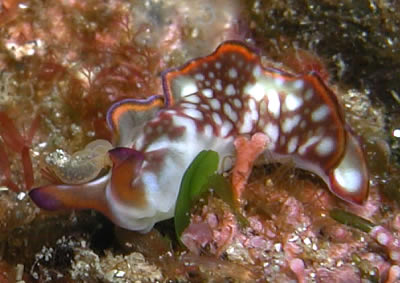
Kahalalide compounds are peptides that are isolated from a Hawaiian herbivorous marine species of mollusc, Elysia rufescens, and its diet, the green alga Bryopsis sp. Kahalalide F and its synthetic analogues are the most promising compounds of the Kahalalide family because they show antitumoral activity. Linear solid-phase syntheses of Kahalalide F have been reported. Here we describe several new improved synthetic routes based on convergent approaches with distinct orthogonal protection schemes for the preparation of Kahaladide analogues. These strategies allow a better control and characterization of the intermediates because more reactions are performed in solution.
Convergent Approaches for the Synthesis of the Antitumoral Peptide, Kahalalide F. Study of Orthogonal Protecting Groups.
Gracia C, Isidro-Llobet A, Cruz LJ, Acosta GA, Alvarez M, Cuevas C, Giralt E,
Albericio F.
Institute for Research in Biomedicine, Barcelona Science Park, University of Barcelona, 08028-Barcelona, Spain, Laboratory of Organic Chemistry, Faculty of Pharmacy, University of Barcelona, 08028-Barcelona, Spain, PharmaMar S.A.U., 28770-Colmenar Viejo (Madrid), Spain, and Department of Organic Chemistry, University of Barcelona, Marti i Franques 1, 08028-Barcelona, Spain.
Kahalalide compounds are peptides that are isolated from a Hawaiian herbivorous marine species of mollusc, Elysia rufescens, and its diet, the green alga Bryopsis sp. Kahalalide F and its synthetic analogues are the most promising compounds of the Kahalalide family because they show antitumoral activity. Linear solid-phase syntheses of Kahalalide F have been reported. Here we describe several new improved synthetic routes based on convergent approaches with distinct orthogonal protection schemes for the preparation of Kahaladide analogues. These strategies allow a better control and characterization of the intermediates because more reactions are performed in solution.

Thiocaraline : Total Solid-Phase Synthesis of the Azathiocoraline Class of Symmetric Bicyclic Peptides.
2006 September 5
Total Solid-Phase Synthesis of the Azathiocoraline Class of Symmetric Bicyclic Peptides.
Bayo-Puxan N, Fernandez A,Tulla-Puche J, Riego E, Cuevas C, Alvarez M, Albericio F.
Barcelona Biomedical Research Institute, University of Barcelona, Barcelona Science Park (PCB), 08028 Barcelona, Spain .
Thiocoraline is a potent antitumor agent isolated from the marine organism Micromonospora sp. This symmetric bicyclic depsipeptide binds the minor groove of DNA. Here we report two solid-phase strategies for the syntheses of azathiocoraline and its analogues. The thioester linkage was replaced by an amide bond to improve the compound's pharmacokinetic properties. The first strategy is based on a convergent (4+4) approach, whilst the second is a stepwise synthesis, cyclizations in both approaches occurring on the solid support. These two strategies were designed to overcome problems caused by the presence of consecutive noncommercial N-methyl amino acids, to avoid epimerization during cyclization and/or fragment condensation, and to form the disulfide bridge under solid-phase conditions. The heterocyclic moiety was added in the last step of the synthesis to assist the preparation of libraries of new compounds with potential therapeutic applications.
Total Solid-Phase Synthesis of the Azathiocoraline Class of Symmetric Bicyclic Peptides.
Bayo-Puxan N, Fernandez A,Tulla-Puche J, Riego E, Cuevas C, Alvarez M, Albericio F.
Barcelona Biomedical Research Institute, University of Barcelona, Barcelona Science Park (PCB), 08028 Barcelona, Spain .
Thiocoraline is a potent antitumor agent isolated from the marine organism Micromonospora sp. This symmetric bicyclic depsipeptide binds the minor groove of DNA. Here we report two solid-phase strategies for the syntheses of azathiocoraline and its analogues. The thioester linkage was replaced by an amide bond to improve the compound's pharmacokinetic properties. The first strategy is based on a convergent (4+4) approach, whilst the second is a stepwise synthesis, cyclizations in both approaches occurring on the solid support. These two strategies were designed to overcome problems caused by the presence of consecutive noncommercial N-methyl amino acids, to avoid epimerization during cyclization and/or fragment condensation, and to form the disulfide bridge under solid-phase conditions. The heterocyclic moiety was added in the last step of the synthesis to assist the preparation of libraries of new compounds with potential therapeutic applications.

Yondelis Resultados comparativa ( EEUU ) Inhibicion de la DNA .
ET-743 Inhibition of RecBCD Enzyme by Antineoplastic DNA Alkylating Agents.
Inhibition of RecBCD Enzyme by Antineoplastic DNA Alkylating Agents.
2006 Sep 1
Dziegielewska B,
Beerman TA,
Bianco PR.
Department of Pharmacology and Therapeutics, Roswell Park Cancer Institute, Buffalo, NY 14263, USA.
To understand how bulky adducts might perturb DNA helicase function, three distinct DNA-binding agents were used to determine the effects of DNA alkylation on a DNA helicase. Adozelesin, ecteinascidin 743 (Et743) and hedamycin each possess unique structures and sequence selectivity. They bind to double-stranded DNA and alkylate one strand of the duplex in cis, adding adducts that alter the structure of DNA significantly. The results show that Et743 was the most potent inhibitor of DNA unwinding, followed by adozelesin and hedamycin. Et743 significantly inhibited unwinding, enhanced degradation of DNA, and completely eliminated the ability of the translocating RecBCD enzyme to recognize and respond to the recombination hotspot chi. Unwinding of adozelesin-modified DNA was accompanied by the appearance of unwinding intermediates, consistent with enzyme entrapment or stalling. Further, adozelesin also induced "apparent" chi fragment formation. The combination of enzyme sequestering and pseudo-chi modification of RecBCD, results in biphasic time-courses of DNA unwinding. Hedamycin also reduced RecBCD activity, albeit at increased concentrations of drug relative to either adozelesin or Et743. Remarkably, the hedamycin modification resulted in constitutive activation of the bottom-strand nuclease activity of the enzyme, while leaving the ability of the translocating enzyme to recognize and respond to chi largely intact. Finally, the results show that DNA alkylation does not significantly perturb the allosteric interaction that activates the enzyme for ATP hydrolysis, as the efficiency of ATP utilization for DNA unwinding is affected only marginally. These results taken together present a unique response of RecBCD enzyme to bulky DNA adducts. We correlate these effects with the recently determined crystal structure of the RecBCD holoenzyme bound to DNA.
Inhibition of RecBCD Enzyme by Antineoplastic DNA Alkylating Agents.
2006 Sep 1
Dziegielewska B,
Beerman TA,
Bianco PR.
Department of Pharmacology and Therapeutics, Roswell Park Cancer Institute, Buffalo, NY 14263, USA.
To understand how bulky adducts might perturb DNA helicase function, three distinct DNA-binding agents were used to determine the effects of DNA alkylation on a DNA helicase. Adozelesin, ecteinascidin 743 (Et743) and hedamycin each possess unique structures and sequence selectivity. They bind to double-stranded DNA and alkylate one strand of the duplex in cis, adding adducts that alter the structure of DNA significantly. The results show that Et743 was the most potent inhibitor of DNA unwinding, followed by adozelesin and hedamycin. Et743 significantly inhibited unwinding, enhanced degradation of DNA, and completely eliminated the ability of the translocating RecBCD enzyme to recognize and respond to the recombination hotspot chi. Unwinding of adozelesin-modified DNA was accompanied by the appearance of unwinding intermediates, consistent with enzyme entrapment or stalling. Further, adozelesin also induced "apparent" chi fragment formation. The combination of enzyme sequestering and pseudo-chi modification of RecBCD, results in biphasic time-courses of DNA unwinding. Hedamycin also reduced RecBCD activity, albeit at increased concentrations of drug relative to either adozelesin or Et743. Remarkably, the hedamycin modification resulted in constitutive activation of the bottom-strand nuclease activity of the enzyme, while leaving the ability of the translocating enzyme to recognize and respond to chi largely intact. Finally, the results show that DNA alkylation does not significantly perturb the allosteric interaction that activates the enzyme for ATP hydrolysis, as the efficiency of ATP utilization for DNA unwinding is affected only marginally. These results taken together present a unique response of RecBCD enzyme to bulky DNA adducts. We correlate these effects with the recently determined crystal structure of the RecBCD holoenzyme bound to DNA.


17 septiembre 2006


Arrays - HPV Clinico de Genomica SAU . Acuerdos con 18 Paises .

Ya son 18 los paises en los que ya se dispone de distribuidor oficial del Clinical Arrays Francia , Italia , Portugal , Grecia , Lituania , Mexico , Alemania ,Chile , Inglaterra , Suiza , Benelux ,Suecia ,Austria , Dinamarca , Turkia,Finlandia , Estonia y Letonia .
Genomica el año pasado incremento un 101% su I+D ......
Inglaterra :
En Inglaterra el precio del test parece ser rondara los 128 Euros ....
ARRAYS®-HPV CLÍNICO ( Genomica SAU ( Grupo Zeltia ) ) es una detección completa y un sistema genotyping que detecta los 35 tipos más frecuentes de HPV, asociados al riesgo (alto o punto bajo) de desarrollar carcinoma mucosal y el cáncer cervical.
HPV genotyping service (single sample)
Test includes 35 genotypes (main high and low risk).
Our price: £ 80.00
€ 128.00

Aplidin USA en Fase II In Androgen-Independent Prostate Adenocarcinoma
Copyright 1998 - 2006 University of Washington. All rights reserved.
Last reviewed: 7 August 2006. Last updated: 7 August 2006 gs.
University of Washington Health Sciences
Research Studies Seeking Volunteers
Reference: 20060381
Study Title:
A Phase II, Multicenter, Open-Label, Clinical And Pharmacokinetic Study Of Aplidin® As A 3 –Hour IV Infusion Every 2 Weeks, In Relapsing Or Refractory Patients With Androgen-Independent Prostate Adenocarcinoma
Study Description:
The purpose of this study is to determine whether or not an investigational drug called Aplidin is safe and effective at controlling metastatic prostate cancer that has not responded adequately to prior hormone therapy.
Participants may be in the study for up to about 6 months, not including screening exams to see if they are eligible.
Participants will receive an infusion of Aplidin once every 2 weeks. Each infusion lasts approximately 3 hours, and is given through a vein (intravenously). Participants will also have regularly scheduled blood draws, bone scans and CT scans.
Eligibility Criteria:
1. Men with metastatic prostate cancer that no longer responds to hormone treatment and is getting worse, as evidenced by rising PSA and worsening bone or CT scans.
2. Patient is 18 years of age or older.
3. Patient must have received prior chemotherapy with docetaxel (also called Taxotere)
4. Patient has recovered from any toxicity derived from previous treatments.
5. Patient has adequate heart function.
6. Patient must have stopped prior therapy:
• at least 6 weeks before starting this study, if treated with nitroso-urea or high dose chemotherapy
• at least 4 weeks before starting this study, if treated with other chemotherapies or biological agents
• at least 6 weeks before starting this study, if treated with extensive external beam
Exclusions (conditions that would prevent a volunteer from participating in this study):
1. Other current anti-cancer therapy.
2. More than 2 previous types of systemic therapy (biologic or chemotherapy).
3. History of another cancer with the exception of:
- Non-melanoma skin cancer.
- Any other cancer that has been successfully treated, with no evidence of disease for at least 10 years.
4. History of significant heart problem, or other clinically significant problems.
Location:
Most of the treatment will be given at the Seattle Cancer Care Alliance (SCCA) outpatient clinic. If hospitalization is needed while in Seattle, participants will be admitted to the University of Washington Medical Center (UWMC).
Principal Investigator:
Celestia Higano, MD
School of Medicine
For further information about this study, please contact:
Peggy Pitzel, RN, Study Coordinator
206-288-2171
Last reviewed: 7 August 2006. Last updated: 7 August 2006 gs.
University of Washington Health Sciences
Research Studies Seeking Volunteers
Reference: 20060381
Study Title:
A Phase II, Multicenter, Open-Label, Clinical And Pharmacokinetic Study Of Aplidin® As A 3 –Hour IV Infusion Every 2 Weeks, In Relapsing Or Refractory Patients With Androgen-Independent Prostate Adenocarcinoma
Study Description:
The purpose of this study is to determine whether or not an investigational drug called Aplidin is safe and effective at controlling metastatic prostate cancer that has not responded adequately to prior hormone therapy.
Participants may be in the study for up to about 6 months, not including screening exams to see if they are eligible.
Participants will receive an infusion of Aplidin once every 2 weeks. Each infusion lasts approximately 3 hours, and is given through a vein (intravenously). Participants will also have regularly scheduled blood draws, bone scans and CT scans.
Eligibility Criteria:
1. Men with metastatic prostate cancer that no longer responds to hormone treatment and is getting worse, as evidenced by rising PSA and worsening bone or CT scans.
2. Patient is 18 years of age or older.
3. Patient must have received prior chemotherapy with docetaxel (also called Taxotere)
4. Patient has recovered from any toxicity derived from previous treatments.
5. Patient has adequate heart function.
6. Patient must have stopped prior therapy:
• at least 6 weeks before starting this study, if treated with nitroso-urea or high dose chemotherapy
• at least 4 weeks before starting this study, if treated with other chemotherapies or biological agents
• at least 6 weeks before starting this study, if treated with extensive external beam
Exclusions (conditions that would prevent a volunteer from participating in this study):
1. Other current anti-cancer therapy.
2. More than 2 previous types of systemic therapy (biologic or chemotherapy).
3. History of another cancer with the exception of:
- Non-melanoma skin cancer.
- Any other cancer that has been successfully treated, with no evidence of disease for at least 10 years.
4. History of significant heart problem, or other clinically significant problems.
Location:
Most of the treatment will be given at the Seattle Cancer Care Alliance (SCCA) outpatient clinic. If hospitalization is needed while in Seattle, participants will be admitted to the University of Washington Medical Center (UWMC).
Principal Investigator:
Celestia Higano, MD
School of Medicine
For further information about this study, please contact:
Peggy Pitzel, RN, Study Coordinator
206-288-2171


Suscribirse a:
Entradas (Atom)