17 marzo 2017

PharmaMar‏ . Reunión / Conference // Slingshot para tratar los detalles de un año crucial para nosotros.


Make Informed Investment Decisions with Affordable Access 


Slingshot members are talking to management! The topic is:

A conversation with PharmaMar's Director of Oncology, Newly Hired COO, and Director of Capital Markets to discuss the upcoming pivotal year for the firm.

Ticker(s): PHM.MC, TSRO, CLVS .

Who's the expert?

Resultado de imagen de pharmamar
* Luis Mora Capitán - Managing Director, Oncology Business Unit.

* Pascal Besman - Chief Operating Officer.

* José Luis - Director, Investor Relations & Capital Markets .


Sponsored By: PharmaMar  (OTCPK:PHMMF) .

PharmaMar is a company focused on oncology and committed to research and development which takes inspiration from the sea to discover molecules with antitumor activity. We are an integrated company that seeks innovative products to provide healthcare professionals with new tools to treat cancer.
PharmaMar’s commitment to patients and to research has made it a world leader in the discovery of antitumor drugs of marine origin.

This interview was conducted by Joe McCann, CEO of Slingshot Insights.

Besman: Hello.
Slingshot: Hi, this is Colleen with Slingshot Insights. Hi, do I have Pascal and the rest of the management team on?
Besman: Yep, we're all here.
Mora: Hello.
Luis: Hello.
Slingshot: Hi, everyone.
Mora: Hi.

Slingshot: Gentlemen, thanks so much for taking the time for this call today. We're really looking forward to learning more about PharmaMar and its product pipeline in the oncology space. For compliance purposes, I'd just like to confirm a few key points, which I'll quickly read through and then each of you can grant your verbal consent at the end.
So first, this call is being recorded and a transcript of the call will be available to members of the Slingshot community. Second, you attest that you will not disclose any material nonpublic information or information that will break any confidentiality agreements by which you are bound. So, Pascal, Luis, and José, do you agree to these terms?
Besman: Yes.
Luis: Yes.
Mora: Yes.

Slingshot Admin: Excellent. And Joe, as the call leader, you're also required to keep any material nonpublic information confidential. If you are currently a public company employee or have been employed by a public company within the last 12 months, you attest that you will not share any material, nonpublic information or information that will break any confidentiality agreements by which you are bound. Do you agree to these terms, Joe?

Slingshot: Yes, I do.

Slingshot Admin: Wonderful. Additionally, I'd like to note that this call is intended for informational purposes only. Not investment advice. The content of this call, including any and all information provided regarding individual securities or industries do not constitute financial, legal, or tax advice. All participators are on mute on this phone call with the exception of the PharmaMar management team, as well as Joe, the Call Leader. And with that, I'll let you guys take it away.

Slingshot: Thank you, Colleen. Hi, guys. Good afternoon to you. Thank you for getting on the phone with us today. I'm looking forward to this. Maybe just to give everyone a very quick background, I have your positions at PharmaMar listed on the project page, but if we could just go through and maybe just do 30 seconds on your roles at the company and how long you've been there, before we get into the conversation.

Resultado de imagen de jose luis moreno pharmamarMora: Well hello. Good morning. I'm Luis Mora. I'm the Managing Director, Oncology Unit, at PharmaMar. I joined team PharmaMar in the year 2000. For six years I was CFO at PharmaMar. In 2007, I was nominated Deputy General Manager, in early 2008, Managing Director in PharmaMar's Oncology area. Before PharmaMar, I worked on a team with the Montedison group in Italy, in the all different pharmaceutical and chemical areas. I was a financial consultant for the group, and my first role I worked in Barcelona at Zambón Pharmaceutical as the Financial Controller, and was CFO in Zambón, Portugal. I've had more than 32 years experience in this business, in pharmaceutical and biotech.

Slingshot: Thank you for coming on.
Luis: Good afternoon. My name is José Luis Moreno. I'm the Capital Markets and Investor Relations Director. I joined the company in 2009. Prior to that I was head of Equity Sales at Benito y Monjardín and afterwards in Banco Espirito Santo. I started my career in derivatives, as a market making, and also prior to joining the company I was working at a local asset management firm in Spain, Solventis, where we also provided consulting to hedge funds. One of the things I did, in my prior post before I joined the company, was the listing Zeltia in 1999, in 1998 in marketing and sales. It was my first contact with the company.
Besman: Joe good morning to you. Pascal Besman, I joined the company about four months ago after 34 years on Wall Street as a healthcare institutional salesperson.

Slingshot: Pascal, you and I have known each other from back when I was on the buy-side at SAC ,and for years, so it's great to be working with you once again on this and doing a call.
I know we have a lot of different levels of familiarity with the PharmaMar story on the line right now, and I think it could be really helpful if we just got a minute or two on the history, and how your products have come about. I know that there's an interesting story that unifies them, so maybe if you guys could walk me through how the company's gotten to where it is today.
Luis: PharmaMar was founded in the late '80s. The vision, the idea of our chairman, who was the founder of PharmaMar, he had this idea about developing drugs from the sea. He's a full biochemistry professor, so he's a scientist himself, and he had this idea that searching in the sea could be a very good source of raw materials to develop drugs. Most of the drugs came from land, so he thought there could be very good opportunities to search in the sea. And at the time he had the opportunity of searching the sea, because he had access to boats from different companies, and he had an opportunity, so that's how we started. That's the origin of the company. That was the idea of our Chairman.
Throughout the years, it's proven a successful idea. YONDELIS® is a clear example of that. It's a molecule that was discovered from a marine invertebrate, from a tunicate. It's reached the market. Throughout the years, we've also built up what is probably the biggest marine library of samples in the world. We have over 200,000 different samples, which are perfectly classified the specificity of all of them. Also the fact that we search in the sea; we only get inspired in by the sea. We only have a few grams of invertebrates, and then we have to synthesize them in the lab.
That also has proven for us - in a sense that has allowed us to develop drugs within a novel mechanism of action. Not only just because of the sea, but what this has proved is that we came up with the novel mechanism of action, that could find a niche in the market, or some of them have proved to be very synergistic with the current drugs being developed. So far the model has worked very well for us, and we're leaders and we're pioneers in searching the sea to develop drugs.

Slingshot: To understand what you're saying there, the inspiration or the knowledge for the molecule comes from the sea, but you guys then synthesize it in the lab and don't actually rely on a marine source for the production of the drug.
Luis: Exactly. Yeah, we just need a few grams as an example to get inspired, and then as you just pointed out we synthesize that in the lab. Unless we are able to synthesize a molecule, and we've seen [inaudible 00:08:10]; if we're not able to synthesize, it's not feasible to develop that. So that will be a red flag to stop it.

Slingshot: Got it. Excellent. I understand that. What things have you gotten from the sea? Can we talk through the key assets of PharmaMar?
Besman: Yeah thanks Joe.

Slingshot: Some people are on the line, I know, have said they're not quite familiar with you guys, and they're excited to learn, so just ... What do you guys see as your major assets? I know YONDELIS® is approved,

Resultado de imagen de pascal besmanBesman: YONDELIS® is our first drug, and it's approved in over 80 countries in the world, something a lot of bio techs can't say. It's approved in Europe for sarcoma and ovarian, in the US we have a partner, Johnson & Johnson, and in Japan, Otsuka through Taiho, which both got only the sarcoma label so far, in the end of 2015. YONDELIS® did last year over $160 million of global revenues, of which we booked about a hundred of it, and it continues to grow and form the basis of a pretty good backbone to the corporation, given the revenue base.
We have an analog of YONDELIS®, a new and improved version shall we say, which is Lurbinectedin. You can call it 'Lurbi', if you want. And Lurbi is in two, soon to be three and four, pivotal Phase 3 trials. The first two indications are in ovarian, which is fully enrolled, with data due to readout second half of the year. Small cell lung cancer, second line is currently recruiting, and we've already stated that we are going to be going into a BRCA2 pivotal trial in due course.
Beyond those two, our marine discovery engine, which José Luis was just talking about, provides really a very rich pipeline of compounds to continue to push through development that we think in some ways is perhaps an eternal source of our pipeline.

Slingshot: That's interesting. Do you think that those compounds will be limited to oncology, and are you aware of any other companies with the synthesizing capability that you guys have been working on? Do you think it's only going to be limited to oncology applications, based on your early findings?
Besman: There's no intuitive reason to believe that mother nature decided to only put oncology drugs in the sea, so we intuitively would believe that there would be applications in infectives or CNS or Cardio, but that will not be something we do.
We are currently investigating business development to license access to the library for people who wish to prosecute it in other areas, but we're exclusively focused in oncology. As for synthesis, it's a very simple word and a very complex process. YONDELIS® itself is 18 steps to synthesize it, so it's not easy. I can't really say who or what has the capability. It's not necessarily totally unique, on the other hand it's not something that you can fall off a log and synthesize one of these compounds.

Slingshot: I think, when I was talking to various members about this call today, one of the most common questions was around Pascal's joining, and I wanted to ask Luis, what got you guys to bring Pascal onboard and to work on a US presence right now, given the stage of the company? I'd just like to hear how that got started, and what the process was like, and what the decision-making philosophy was?
Mora: We announced the strategy for PharmaMar to build the commercial operations in the USA for Lurbinectedin, because it is our key drug. So you know we sell a drug in Europe currently. We have a partners for the other countries, for YONDELIS®, but with 1183, we decided to move to the USA in order to sell directly. This is an important part of the strategy for the company. The other one is we want to win visibility in the USA to engage more consumers, patients, et cetera. When we searched the market, we were looking for the right person to help us to conduct this important study. In Pascal, we thought it was a good decision to incorporate Pascal into our team in order to lead the PharmaMar US strategy. We are very happy to have Pascal with us.
Luis: It may be interesting if Pascal could just give a hint about what your plans are in terms of gaining more visibility with patients and patient associations and trials.
Besman: Yeah. Thank you, Jose Luis. Certainly in the United States market, patient advocacy is very advanced, especially in certain cancers. And in those areas, we are already at relatively advanced stages of negotiating some partnerships that will help us really educate both patients, caregivers and the KOL communities, and really try improve enrollment curves, obviously, and really get the word out.
We're also going to be quite active in various other sponsorships through year of some lesser-known medical meetings. We were a sponsor for example of TAT, Targeted Anticancer Therapies, which is in Paris this week. So there's going to be a much louder noise about us and a louder presence in various areas.

Slingshot: Pascal I understand that strategy, but also what attracted you to PharmaMar? I worked directly on Wall Street for seven years, and lasted that long. What after such a long career, really enticed you to pick PharmaMar of all these clients, and what made you make the jump?
Besman: Thanks. I've known the team here for about a decade, Joe, and I really have been amazed at what they've achieved. When you think about how many biotechs, how few of them actually ever get a drug on one market, let alone 80, that's a very good starting point. In addition, I was very impressed with their professional and personal integrity. The revenue base of YONDELIS® really is a tremendous foundation that very few biotechs, the binary bio techs, who you say that I was working with so many of them, have.
In addition, when I think of lurbinectedin compared to YONDELIS®, I think it's undeniable at this point that it's an active drug. So based on that and the law, the rule of multiplicity, I think the chances of it failing in four consecutive Phase 3s is pretty slim. And if that is going to be the case, that it will succeed at a minimum of one of the Phase 3s, and I think it may be more, then the valuation gap of PharmaMar, compared to what it would be if it was an American biotech, was just too appealing to pass up.

Slingshot: I think that's a great segue, because the biggest comment after the curiosity around your move, Pascal, has been around the listing status of you guys. Madrid isn't a gating factor for a lot people on the phone, but it is potentially a value-disconnecting one. Do you guys have any plans to list? I think I had seen on your Q1 call a mention about an F1, so can you just maybe give us an update, José or anyone, on what the times are for a US listing if there is one?

Resultado de imagen de jose luis moreno pharmamarLuis: When we announced the strategy a few years ago, the five year strategy, among those plans were potential listing or potential IPO in the US. That's the end of roadmap, and we getting the company ready. We haven't really mentioned our calendar or anything. We're just waiting for the right time to do it, in terms of market, price and the calendar of news flow for the company.
But it's a clear decision for us and a clear strategic decision. Going back about two, three years ago, when we decided on the strategy of focusing on oncology, and we set ourselves this goal of bringing two new drugs to the market, as well as YONDELIS®. So going from one compound to three compounds on the market, we had to put the structure of the company in line with the decision of focusing on oncology and making very clear that was our focus, and the rest was non-strategic.
That was one of the reasons why we did the reverse merger, allowing investors to invest directly in oncology. The second reason is whatever corporate movement we did, like an IPO or selling any non-strategic assets, the proceeds will go directly to the oncology company. Then getting the company ready to, as you pointed out, to make a step forward and go in the US. Yeah, there is no roadmap, certainly we cannot talk about our calendar at this point, but we've been working toward that, and when it is the right time from the market point of view, the price, we'll go ahead.

Slingshot: I wanted to talk about the pipeline, and I know that Lurbi is one of the more exciting programs. I think a lot of customers and members of Slingshot on this call, have been on PARP calls with us, whether they're specific to Tesaro or just the overall landscape and things like that. So when we hear about ovarian cancer as one of the first targets, I think a lot of people without doing any diligence, and myself included, think, "Oh, what about PARPs?" Could you maybe talk to us a little bit about the role in that landscape, how these things get approved, and how you guys fit.
Besman: This is a question we get in just about every investor meeting. So let's just remind everyone, you know, a PARP is a DNA repair inhibitor. As such, it kind of makes sense that it would be used after you've used a DNA damaging agent, whether it's a drug or it's radiation. That ties in very well with this new maintenance setting that we hear, which is after the usual platinum frontline therapy, which is a DNA damaging drug, and then you would use a maintenance, which is where olaparib is approved in EU and niraparib currently filed in the US and EU. Unfortunately, even with that maintenance setting, most women will then at some point progress, and be deemed, based on the time into that progression, as either sensitive, resistant or refractory.
Lurbi is seeking a label in ovarian resistance. YONDELIS® has a label in platinum-sensitive, and beyond that second-line setting, which is what we call sensitive resistant or refractory, comes the third-line setting, which is where we're seeing the PARPs again used. Again it intuitively makes sense after another DNA damaging agent, whether it's a rechallenge with a platinum or it's a Lurbinectedin, so that's where rucaparib got approved recently and olaparib is approved as well, in late line with mutation. Does that answer your question about the PARPs?

Slingshot: If I'm hearing you correctly, they're not competing in the same line of therapy, because they're approaching it differently mechanistically. So they complement each other more than directly compete for patients at the various points in their treatment cycle?
Besman: Yeah, that's correct. The PARPs are maintenance and third-line, and both the YONDELIS® and Lurbinectedin are in second-line.

Slingshot: Got it. So the ovarian trials coming up first this year, could you kind of give us a little bit of color on when in the year you think that those trials might read out? I have a few questions on the powering of the study, but ovarian cancer is fairly heterogeneous to the patient population, so when you think about those types of studies, their heterogeneity is one of the scary things for investors. So how do you guys power that, and how do you think about that, and what kind of comfort can you give us, given that backdrop?
Mora: Usually the ovarian cancer population is divided in three types of patients, the refractory to the third line, resistant, and sensitive. YONDELIS® is approved in ovarian sensitive, platinum sensitive. Our trial with Lurbi is for patients resistant to platinum, then this is the setting when we can do the trial.
The trial, we already have finished the recruitment. We included 443 patients in two arms; one is Lurbinectedin and the other arm is the investigator's choice of Doxil or Topotecan. The primary endpoint of progression free survival is powered at 90% of the hazard ratio 0.7. Then we expect to win in PFS very close to 30% in the control arm. We expect top-line results in the last quarter of this year, and we are confident that success in the Phase 2 trial will be the base to design and agree to a Phase 3 trial. The recruitment was very fast, faster than our expectations, then this will demonstrate that there is a huge medical need, and the second one is getting Lurbinectedin direct to the doctors. [missing audio 00:23:26]

Slingshot: The other thing that I noticed, the difference between the Phase 2 and the Phase 3, was the dosing of Topotecan, Topo. I think it was underdosed in the Phase 2, and I'd like to just understand how that came to be, why it was underdosed in the Phase 2? And then with the Phase 3 being daily, how have you guys, again back to the powering and thinking about that, how have you incorporated it?
Besman: That's a good question. So the Phase 2s happened during the period that the Doxil shortage emerged, and therefore the control arm had to be changed from Doxil to Topotecan. Topotecan is not a terribly easy drug to tolerate, and in this Phase 2 trial, while it was determined that the control arm would be an also quite often used Topotecan regime, which is weekly as opposed to daily, and the results for that are usually lessor, although it's more tolerable. And so the PFS that you see in our Phase 2s, of 1.7 months and the OS of 8.3 months are both, we acknowledge, lower than you would get with a daily Topotecan, which is part of our control arm in the Phase 3, the other part being the Doxil, which is no longer on shortage.
When you look in the literature at how Doxil and Topotecan have done in this population, it seems to be relatively constant in the highish two to lowish three months, and most seem to congeal around three months for Topotecan, 3.2 for Doxil. So the way we think about this is, if you take the highest that you get in this population, usually with Doxil, that would be about 3.2 months. To generate a hazard ratio of 0.7, back of the envelope math would say that's about a 50% improvement, 3.2 times 150% would see the drug arm need to be around 4.8 months, and that's about a 20% decrement to what we saw in the drug arm in the Phase 2. So we think that the trial is adequately powered to pick up the benefit that we expect to deliver, and the trial is stratified, so that we will have meaningful numbers of both Topotecan and Doxil.
Slingshot: So when you say 20% decrement, you mean basically that there's a 20% cushion based on the Phase 2 results to hit the powering in the study.[crosstalk 00:26:08]
Besman: I said we would need to be 50% better than 3.2 is 4.8, and we showed 5.7 months PFS.

Slingshot: Got it. So it's a pretty good cushion. Okay. Let me go on over to the BRCA2 trial, how are you guys thinking about enrollment there, and does the existence of PARPs and other PARP treatment out there, how much does that cloud the patient population? Does it make it harder to find them, or are those patients further down the line? How do you guys think about enrolling a trial like that right now?
Besman: Also a question that's asked quite a bit. The data that we presented at ESMO last year saw the objective response rate in the breast cancer, BRCA2, was 67%, 61% which was really eye-popping because most of the data we've seen so far has only been in BRCA per se. We know that BRCA2 is a tougher diagnosis than BRCA1, and we know that the PARPs have delivered objective response rates of the order of 25ish to maybe 30% in BRCA. So the 60-odd percent response rate was really eye opening, and with that in our pocket, we have met with the FDA and are finalizing a protocol that would see a single arm trial of 110-odd patients, with a single arm and an objective response rate endpoint.
So to your point about how easy or hard will it be to enroll this trial; it's hard to really give an answer, because no one's done it. That said, there's probably a population in the United States of about 7,500 women who meet our enrollment criteria, which would also have no prior PARP, and about 50% more than that, about 11,000 in Europe.
So we do recognize, it's likely to be challenging and for that we have already signed contracts with two leading patient groups, with a view to them helping us pick investigators, pick sites, educate their women, help get the word out that a trial is open, that it's a targeted therapy for BRCA2. And they're very enthusiastic about helping their members and working with us collaboratively, and we will be able to use their names publicly, so that people know that we are working with them.
So we're quite excited about that, and in addition, we're planning on opening an expanded access parallel trial to this, so that any woman who is BRCA2, who is ineligible, because she's had prior PARP, for example, will still be able to get Lurbi. We think that that really is something that will resonate with the patients advocates and the KOLs.

Slingshot: Yeah so that's interesting. I'm not as familiar with that, and you had mentioned it to me recently. Maybe if you could just talk a little bit about that. Is that any pharmaceutical company can make that decision or does the FDA approve it? It sounds a little bit like "right to try" to me that I hear thrown around a lot from the current administration in the US. How exactly does that program work? Maybe just a little bit ... That does sound like it could be interesting.
Besman: It's not "right to try" because the FDA is involved in allowing you to do this. If we go back a couple of years ago, there was an unfortunate situation with another public biotech that had a Phase 3 asset in CMV. A child had CMV and wanted to get access to the drug, and the company stated that they did not have a pediatric arm to put the child in. It became very much a viral news story, social media story, and ended up, unfortunately, costing the CEO his job. And to cut a long story short, the boy got the drug, the boy got cured, thankfully, the Phase 3 failed, and we'd like to avoid that situation happening to us.
So we've already spoken to the FDA, and we would like to have an expanded access trial on the side, here, and that will allow BRCA2 women who don't meet the eligibility criteria to enter, and they can be treated. It will help us collect a larger safety database. It will help us do analytics in terms of other subsets that may work, sequencing compared to PARPs, before/after/during. In addition, probably most importantly, it's the right thing to do.

Slingshot: I think that's pretty interesting. Okay. The third trial here, currently is small cell, and there's a change in the dosing in primary endpoint from Phase 3 to Phase 3. Could you just talk to us a little bit about why that was done, and what was done for progression free survival powering given this change? Again, just trying to understand these small but potentially important differences.
Mora: Yeah sure. This is an important change in the Phase 3, but I think it's in favor of the patients and in favor of the trial. In the Phase 2, we use a flat dose, seven milligrams per square- seven millimeters flat. We analyzed all of the patients, and the equivalent, because seven milliliters flat dose is the actual dose in the trial by a square measure. Then, this is personalized more to the dosing in the patient and not to the activity. Then we reduced dramatically the secondary effects we observe in the Phase 2, but non detrimental objectivity.
And then the second point is, we met with authorities, with the FDA, and the response rate is important but in small cell lung cancer, they consider it is an approval endpoint of PFS. We have extremely good PFS in Phase 2. We have achieved 4.6 months if you consider our resistant and sensitive patients in this Phase 2. Then if we consider only the sensitive, we never disclose, but you can suppose it is much higher than this 4.6. If you compare this 4.6 with the historical data for Topotecan, nivolumab, pembro, Rova-T, they are smaller numbers than our PFS. We designed the trial and powered it for progression free survival, primary endpoint, and overall survival as a secondary endpoint. The trial was agreed to by the FDA, and Pascal mentioned before is well underway.

Slingshot: Great. On the business development side, I saw the press release with the deal in Japan, and it seemed to kind of go under the radar just looking at the stock and some of the things that I watch, in terms of analysts and things. I wanted to just get a sense on what you guys thought of that business development deal. I have a technical questions, actually from another member, but what kind of structure partnerships are you looking for, going forward, for Lurbi? Is Japan a one off in terms of partnering, or ... I'm trying to get a better sense of the structure you guys have in mind, for how you want to bring Lurbi to market, considering how much of the economics you own currently. And whether we should think of Japan as indicative, or just a one off, a nice cash deal?

Resultado de imagen de pharmamar pipelineBesman: I'll answer the first portion, and José Luis will answer the second. In terms of how we think of the deal and what the market thinks of it, we were fortunate to sign the deal December 22nd, and we were unfortunate to sign the deal December 22nd because obviously many people were already on their holidays. But it is what it is, and we were happy to cash the check regardless of the day the deal was signed.
Japan represents approximately 10% of the world's oncology market, so I think most people can do the math and work out what Chugai, which is part [missing audio 00:34:42], and what the asset was worth, and that probably means a lot more than what we think it's worth. We're delighted to have Chugai, which is the leading oncology player in japan, as our partner. And in terms of other business development, and what our plans are for Lurbi, I'm gonna let José Luis answer that one.
Luis: We have a very clear idea about our intention in the US for instance, as compared to YONDELIS®. Luis mentioned before, our idea is to keep commercial rights in the US, so therefore, set up our own sales force, and sell direct. We could either do it on our own, or obviously since we started showing Lurbi's data, we've been approached by different companies and stuff and conversations. So we had a good deal, and what we can say is something very good. We also are contemplating co-promotion agreements. There's early conversations for that, and that's our idea.
We reached the this point where we are releasing data on Lurbinectedin, two in Phase 3, perhaps another one starting shortly, so we're very confident about comparing the drugs, and we have experience of building up YONDELIS® in Europe, which has been successful. We have a very successful sales force, and believe me, building up a sales force in Europe is a complete nightmare. I mean you have to go country to country, you've got 27 languages, all different regulations, then once you get the approval, you have to get the reimbursement in every single country. Even in countries like Italy or Spain, it's not even a single country, it's every single region, which is a nightmare. And we succeeded. Not that many companies have reimbursement in almost all countries in Europe, in sarcoma, including positive recommendation from the NICE in the UK.
I think we gathered all that experience, and in the US, it's more straightforward. It's one country, one language, and all the reimbursement with insurance companies is much more straightforward than it is in Europe.

Slingshot: I spent a lot of time following the Intermune pirfenidone launch when that became the key story going through Europe, and it was pretty incredible to watch how many years and how managerially challenging that was compared to a US launch when you turn on a switch. So that's an interesting background view to be coming at this from.
One question technically, just on the Japanese deal, in terms of the way you guys counted the money, was it 30 million up front, but I think only 6 million went in in 2016, so is the other 24 going in, or are we reading that wrong? That was submitted from somebody listening.
Luis: I mean, that's pretty clear and very straightforward. With the new IFRS that is implemented, in regard to all these type of agreements, we need to recognize or account in our accounts the amount that is linked to all the commitments we have throughout the agreement. That means, we only accounted for 6 million in 2016, and the rest, 24, will probably be recognized within the next couple of days.
As Pascal said, we were lucky enough to sign that in December '16, but the good thing, which is more important for us, is that the cash was in-house, and we cashed the 30 million just a few weeks after. So it was the first half of January, when we got the 30 million, and that was a very important grant. Because yes, in terms of the accountants, and obviously the P&L did not reflect the 30 million, but from the cash position point of view, if we take the 33 million that we released for the year 2016, and we add 30 million, we have a total of 63 million that would have been proforma as of December, and is what we can really have. And that, given our burn rate, that we released of 8.4 million is clearly a very comfortable position for us, at least the next few years to get to our goals that we set ourselves- as we mentioned before of getting the next two compounds on the market.
From that point of view we're very comfortable with our capital and cash structure, and that allow us to concentrate, basically, on our trials and not to worry about the cash.

Resultado de imagen de pharmamar pipeline

Slingshot: Great. I think you already answered, also for anyone listening on the line right now, we're through the questions that I mapped out, which a lot of that was from input of other people listening, but I'm onto the section of things that have been submitted mostly during this call on the project page, so if anybody still has a question, I'll ask that right now. Just for anybody new to these types of calls.
I think that one of the questions that came in, you just answered in terms of your expansion plans in the US, but there is sometimes a nuance with US pharma companies between co-promote and go alone, and so I wanted to see if you guys did have any intentions or considerations around co-promotion in the US for Lurbi, and if they are, I guess they want to know how advanced they are, but I'd be surprised if you want to answer that.
Besman: It's a question we get asked. Obviously, it's nice to have a beautiful daughter that people want to marry. We intend at this point to hang onto Lurbinectedin rights in the United States and build a commercial infrastructure around that. And as Jose Luis said, we think that given our experience of doing this with the complexities in Europe, that we can do this.
On the other hand, we are also very willing to talk to people, who think that our daughter is as beautiful as we think she is provided they have a nice, big dowery, we're willing to talk. But this is our daughter, and we care very much about our daughter.
The other thing that I would say, which is perhaps the flip-side of this, is that the sales force that we've built up over the years in Europe, is a truly strategic asset that we think can be leveraged with other companies who may have a European oncology asset that may not have enough peak sales to justify the critical mass required to have that same infrastructure, and so there's an opportunity there for us to leverage that existing sales force.

Slingshot: Another question here: Are you guys giving any update on the progress of the EMA review for Aplidin? I remember, again, back to the pirfenidone days, kind of going in and asking, "Have the minutes come? Have you guys presented? Where does that stand?" So I don't know if you guys are commenting on that. I don't think that's that common, but is there any update on the progress there?
Mora: Aplidin is in the regulatory process. We submitted the dossier last year. The dossier enclosed the ADMYRE trial, the trials in multiple myeloma, three prior lines. The trial was agreed with EMA, and the trial we announced was a positive trial. Then the regulatory process in Europe is dead, it's in an orphan status, and multiple myeloma is longer than in the USA, unfortunately, and can take about one year. Then we expected the CTMP opinion in the last quarter of this year. So today is in the normal regulatory process, the question and answer from the authorities, and that's it, when we have that, when we have the decision by the CHMP we will announce, and we expect that to be in the last quarter of this year.
The multiple myeloma is an interesting market in this line because there's not many drugs that are approved with three prior lines. Aplidin is a unique mechanism of action, completely different to the other drugs as a protozoan inhibitor. It is not like the lenalidomide families; it's a target therapy. We described it in Nature, last year, and it's safety profile is very good, and can combine with the other drugs.
The market in the three prior lines in Europe is growing after some approval in Europe, and we are working with with Chugai- we have a deal with Chugai Pharma for co-promoting to some countries in Europe.

Resultado de imagen de pharmamar

Slingshot: Here's another one that came in that's interesting to me a little bit: Pascal what's kind of the biggest surprise you've had going over to PharmaMar, and maybe your biggest frustration switching to the corporate side, after so many years on Wall Street? What have the first few months been like for you?
Besman: I've enjoyed it very much. I guess the biggest surprise has perhaps also been my biggest frustration, is that there persists to be quite a number of Real Madrid supporters here. I just don't understand it. None in the room, I hasten to add.
I think that the biggest surprise here has been the absolute willingness to accept change, and not have "not invented here syndrome". I find it really remarkable that they are very very open to listening to ideas. For example, patient advocacy, as you may well know, in Europe, especially in southern Europe, is just not even in its infancy yet. It's not even in utero, shall we say. Whereas in the United States, it's incredibly well organized. I think it's quite a feather in our collective caps that in the four months since I've been here, we've embraced the change to do this, and we've already signed two contracts. So that would be something that has really surprised me.

Slingshot: I think there's just one question here, around burn rate, and they quoted a number, but maybe of you guys could just talk about the company burn rate. I know it's in some of the slides, but you know, what it was for 2016, and if you guided it all around '17, but maybe just help to clear up exactly where you guys are in a cash position.
Luis: We don't do guidance for 2017. Burn rate at our operating level last year was at 8.4 million, and that meant -all that taken into account 30% increase in R&D investment. So last year in oncology was 78 million. One thing we can say was that this year the R&D investment is not gonna grow at the same rate. We're talking about single or lower double digits, so it's not, definitely not growing at the same rate. We spent revenue from YONDELIS® carry on growing at single digits, so from that point of view ... Now burn, we have zero guidance, but should not change that much, and as we mentioned, with the cash that we have already, we have for the next few years a pretty comfortable position.
As for the debt that we have, also we think we're moving the debt pretty nicely. It was a little below 20 million that we refinanced this year, to term debt. By the time we start our [inaudible 00:47:48] 20 million that we need to give back and we've been renewing that pretty nicely, so it's not a problem either.

Slingshot: I think we're coming up on the time here for the call, and I've gotten through most of the questions on the site. Maybe we can just wrap up with any key takeaways that you have and the biggest catalyst coming up on 2017.
A lot of Slingshot members will know how we do our best to organize and structure catalyst events for every stock that we have, in order to give people an idea of when value creation events are going to happen. So some of those are on the project page associated with this, but if you wanted to walk through what you guys see as the most important and exciting catalysts through the rest of this year that could be a good way to end this.
Besman: Sure, so let's just do these, rather than chronologically, by importance, and certainly the most important read this year, catalyst this year, will be the Lurbinectedin Phase 3 data in ovarian cancer, which we anticipate in fourth quarter. It's by the way, not just an event driven in terms of the timing, when one compares to when the last patient's last visit was, because we are also looking to deliver a significant OS dataset to support the application. So it will be quite more mature than you would think in terms of OS.
We also, in probably the fourth quarter, will get the answer from EMA, we think, on the Aplidin application. And probably around the middle of the year, in small cell you'll get a couple of things of interest. You'll get an interim look, which is a futility look only, and in addition we should, at one of the mid-year-ish medical meetings, have some further supportive data of Lurbinectedin in small cell. And then lastly, at some point during the year, we can't really control timetable totally, we should give an update and hopefully have started the breast cancer trial. Those are the main ones for this year.

Slingshot: Great. That's all the questions I have and that I see coming in. Again thank you very much. I know you're very busy, and I appreciate the time to come on and talk to both myself and our community. It's pretty neat to have this kind of access, directly to an exciting story, and so I think the next things that that we have talked about are potentially our KOL call, which is something that the members of Slingshot are a little bit more familiar with, but maybe digging into some of the Lurbi data, ovarian and other diseases. So, we'll be back reaching out to people with that. But in the meantime, I just want to thank you very much again for taking the time. This was great.

Besman: Thank you, Joe. Thanks, listeners. We enjoyed doing it.
Luis: Thank you.
Mora: Thank you very much.
Slingshot: Perfect. Thank you, guys. Have a great afternoon.

16 marzo 2017

PM01183 // PharmaMar US . Edison Investment Aumenta en más de 1 euro el Precio Objetivo de PharmaMar y lo situa en los 5,79 euros . Valora el PM01183 en 3,61 euros y Destaca la Ultima Patente conseguida por este Farmaco que lo Proteje hasta Finales del 2032 .

PHM Pharmamar S.A.

Strong Newsflow Expected in 2017 .


PharmaMar is approaching two key.


Milestones in H217:


 * An Approval Decision for Aplidin for Multiple Myeloma in Europe .

* Phase III Results for Lurbinectedin in Ovarian Cancer.

 The Chugai licence deal for lurbinectedin in Japan has strengthened the company’s financial position (pro forma net debt €32m) and seen it put increased emphasis on its preferred strategy to either self-commercialise or co-promote lurbinectedin in the US. 


Separately, a US manufacturing patent granted last year has extended IP protection for lurbinectedin until at least December 2032.


 These developments have prompted us to adopt co-promotion in the US in our base case valuation scenario and to extend our rNPV model to 2035 vs 2030 previously. 


Our base case valuation has increased by 29% to €1.29bn (vs €1.01bn), or €5.79/share (vs €4.55/share).


...

PharmaMar . Según el Consenso de Analistas del Mercado ( FactSet ) le dan un Potencial de Subida del 82 % y un Precio Objetivo " Medio " de 4,95 euros . Bloomberg Aconseja " Comprar " .


subida770x420.jpgPharmaMar es la Firma de la Bolsa Española que Más puede Subir: un 82% .


ISABEL M. GASPAR - 16/03/2017 .

*.- Se espera que este año vuelva al Beneficio con 7 Millones de euros .
*.- La Compañía Prevé que en 2020 habrá otros Tres Nuevos Medicamentos .

Más de un 70% de las compañías cotizadas españolas tiene potencial de subida, según los expertos. Eso sí, entre todas ellas la que destaca, y por mucho, es PharmaMar. Y es que para los analistas sus títulos pueden subir más de un 80%.

Con poco más de 600 millones de capitalización, la antigua Zeltia, se ha convertido en la firma del mercado español que más puede subir en los próximos doce meses, ya que el consenso de mercado que recoge FactSet ubica su precio objetivo en los 4,952 euros por título, es decir, un 82% más que su cotización actual. Además, el 75% de las firmas de inversión que recoge Bloomberg aconseja comprar sus títulos.

La más optimista es Stifel, cuya valoración, en los 6,45 euros, implica más que duplicar su precio. Otras como JB Capital Markets o CaixaBank creen que su precio justo son los 5,3 y 5,5 euros, lo que se traduce en un repunte de entre el 94% y el 102%.

Desde el punto de vista técnico, Carlos Almarza, analista de Ecotrader, "mantiene sus opciones de volver a presionar la importante zona de resistencia que aparece en los 3,15/3,20 euros mientras no pierda los 2,60 euros. Superar los 3,20 euros ya despejaría el camino para mayores ascensos. Perder los 2,60 euros abriría las puertas a ver una mayor corrección hacia los 2,35 euros antes de que las alzas puedan volver a imponerse".

El año pasado el grupo registró 24 millones de pérdidas, principalmente por las mayores inversiones en I+D y la finalización del acuerdo de licencia con la farmacéutica Janssen. No obstante, de cara a este ejercicio los expertos esperan una vuelta al beneficio, hasta los 7,4 millones de euros. Una cantidad que se multiplicaría por 3,2 veces de cara al año posterior.

El producto estrella del grupo es Yondelis, el primer medicamento de origen marino aprobado en Europa que se utiliza para el tratamiento del sarcoma y el cáncer de ovarios. No obstante, el grupo espera que para 2020 ya haya en el mercado tres compuestos para cinco o más indicaciones de diferentes tipos de cáncer. El principal foco de búsqueda de la firma es el Océano Índico y tal y como explican desde la propia compañía, cuentan con más de 200.000 muestras por lo que cuentan con una de las mayores bibliotecas del mundo.

José Luis Moreno, director de Relación con Inversores y Mercado de Capitales de la compañía, explicaba a principios de año en un encuentro con periodistas que uno de los principales atractivos de PharmaMar reside en que tienen "la capacidad de descubrir nuevas moléculas y, además, tenemos nuestra propia red comercial lo que hace que podamos vender directamente nuestros productos".

Kisqali . Will Pfizer's Growth Be Threatened by Novartis' New Cancer Drug? .

Novartis' New Cancer Drug Kisqali stands ready to challenge Pfizer's Ibrance. But how serious is the threat? .

Keith Speights (TMFFishBiz) Mar 15, 2017 ,

Question mark on top of moneyNovartis (NYSE:NVS) announced on Monday that the U.S. Food and Drug Administration (FDA) approved Kisqali as a first-line treatment for hormone receptor positive, human epidermal growth factor receptor-2 negative (HR+/HER2-) breast cancer. Soon, stories were running warning about the threat the new drug could pose to Pfizer (NYSE:PFE).

It's certainly true that Kisqali is going to compete against Pfizer's successful cancer drug Ibrance. But will Novartis actually threaten Pfizer's growth prospects?

Ibrance vs. Kisqali
Late-stage study results appear to indicate similar efficacy for Ibrance and Kisqali, although no direct head-to-head studies have been conducted. Pfizer reported a median progression-free survival (PFS) rate of 24.8 months for women taking Ibrance plus letrozole compared with 14.5 months for patients taking letrozole alone. Novartis reported a median PFS of 25.3 months for Kisqali plus letrozole and 16.0 months for letrozole alone.

Novartis is pricing Kisqali at an 18% to 20% discount below Ibrance's price, however. Could this lower price cut into Pfizer's sales? Maybe, but there's another important consideration.

Kisqali can cause a heart rhythm disorder known as QT prolongation, which can result in fast, chaotic heartbeats and even lead to death. Physicians will have to closely monitor patients taking the drug.

That could be problematic for Novartis. Physicians could prefer to prescribe Ibrance rather than Kisqali, since Ibrance doesn't have the safety warning related to QT prolongation. The primary safety issue that can occur with taking Ibrance (neutropenia) also occurs with Kisqali.

...

Tasigna . Cancer Drug That Might Slow Parkinson's, Alzheimer's Headed For Bigger Tests .


March 15, 2017 // JON HAMILTON .


Scientists are hoping that a single drug can treat two devastating brain diseases: Parkinson's and Alzheimer's.

The drug is nilotinib, which is approved to treat a form of leukemia.

In late 2015, researchers at Georgetown University Medical Center found that small doses of the drug appeared to help a handful of people with Parkinson's disease and a related form of dementia. They'd tried the unlikely treatment because they knew nilotinib triggered cells to get rid of faulty components — including the ones associated with several brain diseases.

Results of that preliminary study generated a lot of excitement because there is currently no treatment that can slow or halt the brain damage caused by either Parkinson's or Alzheimer's.

"Our phones were basically (ringing) off the hook," says Fernando Pagan, medical director of the translational neurotherapeutics program at Georgetown.

Many researchers were cautious, though. "It was such a small trial, there was no placebo control and it really wasn't designed to assess efficacy," says J. Paul Taylor, chair of the cell and molecular biology department at St. Jude Children's Research Hospital in Memphis.

So Georgetown is launching two larger and more rigorous trials of nilotinib, both designed with input from the Food and Drug Administration. One of the trials will enroll 75 patients with Parkinson's disease, the other will enroll 42 patients with Alzheimer's.

...

15 marzo 2017

Genómica SAU ( PharmaMar Group ) Consolida su Expansión no sólo en América Latina sino en el resto del Mundo.

GENOMICA COMPLETES SUCCESFULLY THE ANVISA AUDIT .

Madrid 02/22/2017

The National Agency of Sanitary Vigilance of Brazil (ANVISA) confirmed on February 16th that GENOMICA successfully passed the audit that verified compliance with the GMPs (Good Manufacturing Practices). These are required by the government of Brazil to all the companies of the sanitary sector that wants to commercialize its products in this country.

hpv genotypingIt was during the last week of January when two agency representatives visited the central facilities of the first Spanish in-vitro diagnostic company. During their stay, the work they performed consisted in verifying compliance with GMP legislation. This legislation covers areas such as data recording, staff qualifications, sanitation, cleanliness, equipment checks, process validation and claims management. The GMP system also requires the total documentation of every aspect of the development, production and logistics processes to allow the traceability of a clinical diagnosis product and its withdrawal in case of a problem detected.

Having the certificate of compliance with the GMPs is a great step forward for the diagnostic company, as it has proven to meet the quality standards demanded in markets as important as the United States or China. In this way, and along with the ISO certificates, already in its possession, GENOMICA consolidates its expansion not only in Latin America but in the rest of the world.

PharmaMar . By Joan Cabrero .

La macrogala contra el cáncer en León termina en escándalo y con «Cero Euros» para la asociación .

Aspecto que presentaba el recinto en el que se celebraba la gala presuntamente solidaria.
Javi Calvo 14 Marzo 2017 .

Ocurrió el pasado 7 de mayo. Y aunque la fecha pudiera parecer muy lejana en realidad, el eco de su escándalo ha llegado hasta el día de hoy. Entonces miles de personas, como muestran las imágenes de aquella jornada, abarrotando el recinto ferial junto al estadio de fútbol Reino de León. Miles de personas entregadas a un espectáculo que se prometía único porque sobre el escenario estaban artistas de la talla de Carlos Baute, Edurne, Juan Magan, Auryn, Gemeliers o Soraya, además de la reconocidísima Orquesta Panorama.

...

«Primero nos dieron largas, no sospechábamos que podría suceder algo así. Esperamos prudentemente, les llamamos, nos comentaban que estaban haciendo sus números y todo para al final decirnos que no cubrieron los gastos, que no facturaron lo suficiente y que por lo tanto no podían darnos nada», ha asegurado este martes Serafín de Abajo, presidente de la AECC León.

«Abusaron de la solidaridad para beneficiarse»

Para este presidente no hay dudas los promotores «son gente que abusa de la solidaridad para beneficiarse ellos, son gente como el caso de los padres de la niña esta que todos hemos visto».

Ahora la Asociación ha cerrado toda posibilidad de acuerdo con los promotores de aquella gala: «Quisieron hacer algo similar en Ponferrada y nos negamos de forma rotunda. Se han aprovechado del bueno nombre de la Asociación y de la generosidad de la gente», ha remarcado este martes.

La Asociación Española Contra el Cáncer en León tenía previsto destinar los ingresos por esta gala a «avanzar en la investigación y en la atención a las personas que sufren cáncer en la ciudad».

...

14 marzo 2017

PharmaMar Joined Recently the Promising Immuno-Oncology Field of Antibody-Drug Conjugates.

HISTORY OF BIOTECH INTERVIEWS SPAIN .
 Clara Rodríguez Fernández on 14/03/2017 .

Spain’s Biotech Ecosystem is Starting to Rise! Meet the Revolution’s Leaders .
Spain’s Largest Biotech .

Luis Mora Capitan
“PharmaMar was founded in 1986. At this time, you can imagine the biotech sector in Spain was not big. It was not known by the public or even by the authorities,” says Luis Mora, MD of the Oncology Business Unit at PharmaMar.

“We were the first company in Spain to launch a Phase I trial, back in 2001,” he remarks. Today, this pioneering company is Spain’s biggest biotech, listed on the Madrid Stock Exchange with a market cap over €600M.

Luis Mora also blames the financial crisis of 2008 for the slow growth of biotech in past years. “Funding for biotech, pharma and universities was dramatically reduced during the crisis. We’re now starting to recover, little by little.” I asked how PharmaMar managed to come out on top despite the challenges the country has faced. “Three factors,” he answers. “Products, finance and team.”.

The science behind PharmaMar’s products draws from nature. “We search compounds for cancer in the sea,” clarifies Mora. “We reproduce in the lab what nature offers us.” The company’s lead drug, Yondelis, originally comes from the sea squirt Ecteinascidia turbinata. “It was the first Spanish drug approved by the EU through a centralized procedure,” he adds.

In terms of finance, PharmaMar was lucky enough to count with a strong partner. “Until 2015, the company was included in the Zeltia group, which provided the money to finance the activity of drug discovery.” Regarding the third factor, Mora explains, “We have a strong team with 18 different nationalities that covers all areas, as well as many agreements around the world that provide us with their know-how.”.

PharmaMar is based in the capital, MadridPharmaMar, which recently joined the promising immuno-oncology field of antibody-drug conjugates, could soon be taking a big step forward for the industry. “The company has decided to move to the Nasdaq in the future,” Luis Mora revealed.
...

Descubren cómo evitar que el cáncer de próstata se extienda a los huesos .


Las células del cáncer de próstata tienen la capacidad para activar específicamente a los osteoclastos para que destruyan el hueso .

Los osteoclastos son las células responsables de la destrucción del tejido óseoLos inhibidores de la enzima MAO-A, ya comercializados para tratar la depresión, evitan la invasión y proliferación de las células del cáncer de próstata en los huesos .

R. I. - @abc_salud Madrid // 13/03/2017 .

En nuestro país se diagnostican cada año más de 33.000 nuevos casos de cáncer de próstata, el tipo de tumor más común entre la población masculina. Un cáncer que, si bien en un gran número de casos no resulta mortal dado su lento crecimiento, causa cada año el deceso de cerca de 6.000 españoles. Y es que este tipo de cáncer presenta una gran capacidad para expandirse e invadir otros órganos –el proceso denominado ‘metástasis’–. De hecho, hasta un 90% de los pacientes que acaban falleciendo a consecuencia del tumor presenta metástasis óseas. De ahí la importancia de un estudio dirigido por investigadores de la Universidad Estatal de Washington en Pullman (EE.UU.), en el que se describe no solo el mecanismo por el que el cáncer de próstata llega a los huesos, sino también una molécula que, ya presente en algunos antidepresivos ‘antiguos’, es capaz de detener todo este proceso.

Como explica Jason Wu, director de esta investigación publicada en la revista «Cancer Cell», «nuestros hallazgos ofrecen una justificación para evaluar el nuevo uso de estos ‘antiguos’ antidepresivos para el beneficio de los pacientes con cáncer de próstata en estadios avanzados que ya presentan signos y síntomas de metástasis».

Hacerse un hueco
Para llevar a cabo el estudio, los autores emplearon un modelo animal –ratones– al que inocularon distintas líneas celulares del cáncer de próstata en humanos. Y lo que vieron es que existe una enzima denominada ‘monoamino oxidasa A’ (MAO-A) que activa una cascada de señales moleculares que facilitan que las células tumorales invadan y crezcan en los huesos. Pero, dado que los tejidos óseos, aun porosos, no son ni mucho menos huecos, ¿cómo es posibles que las células cancerígenas encuentren un lugar donde ‘anidar’ y crecer? Pues porque promueven la destrucción del hueso para hacerse un hueco.

...

13 marzo 2017

Joe Biden: "Lo único Bipartidista que queda en Estados Unidos es la Lucha contra el Cáncer" .

joe-biden-vicepresidente-reuters.jpgEl hombre de confianza del anterior presidente de EEUU, Barack Obama, aseguró que pretende batallar contra el cáncer "hasta el final de su vida" para tratar de paliar lo que su familia y tantas otras han pasado por culpa de esta enfermedad.

EFE 13/03/2017 .

El exvicepresidente de EEUU Joe Biden afirmó hoy que la única batalla que aglutina a los dos grandes partidos del país es la lucha contra el cáncer, una cuestión de la que él mismo es el abanderado desde que perdió a su hijo por un tumor cerebral en 2015.

"Lo único bipartidista que queda en Estados unidos es la lucha contra el cáncer", dijo el demócrata Biden en una conferencia ante más de 800 personas en el marco del festival estadounidense South by Southwest (SXSW), que se celebra estos días en la capital de Texas, Austin.

Él y su esposa, Jill Biden, anunciaron a principios de febrero la creación de la Fundación Biden, una organización centrada en la lucha contra el cáncer, la prevención de agresiones sexuales, el apoyo a las familias de los militares y la promoción de la educación.

La familia Biden se vio golpeada por el cáncer tras la muerte del hijo mayor del matrimonio, Beau, que tenía 46 años y un futuro prometedor en la política nacional en el momento de su fallecimiento.

El exvicepresidente reveló que la idea de impulsar la Ley de Curas del Siglo XXI, aprobada por el Congreso a mediados de diciembre de 2016 y valorada en 4.800 millones de dólares, surgió de un comentario "imprevisto" tras la muerte de su hijo.

Durante su ponencia, Biden puso énfasis en la importancia de la recopilación y la buena gestión de los macrodatos de los casos de cáncer para que los médicos e investigadores tengan una fuente de consulta más amplia y completa que les permita diagnósticos "más precisos y a tiempo de recibir un tratamiento eficaz".

Precisamente, uno de los puntos de esta nueva legislación es la creación de un sistema conocido como Genomic Data Commons (GDC) del Instituto Nacional de Cáncer, una nueva base de datos que centraliza toda la información relacionada con la genética y cualquier dato clínico asociado con la enfermedad y que pretende duplicar el ritmo en las investigaciones en los próximos cinco años.

Biden, al igual que el expresidente Obama, abandonó el poder el pasado 20 de enero, cuando fue investido como cuadragésimo quinto presidente de EEUU el republicano Donald Trump.

Desde que salió de la Casa Blanca, Biden ha mantenido un perfil relativamente bajo, haciendo sólo algunas apariciones públicas, entre ellas apoyar el debut de su hija Ashley Biden en su línea de ropa el mes pasado.

No obstante, aseguró que está muy centrado junto a su esposa en el nuevo proyecto de lucha contra esta enfermedad y que dará el "cien por ciento" para avanzar en esta cuestión.

Biden, que fue vicepresidente durante 8 años y senador estadounidense durante 36, habló durante la parte interactiva de la conferencia SXSW, donde empresarios, empresas emergentes e innovadores convergen para mostrar sus nuevos productos y debatir sobre cómo la tecnología está cambiando el mundo.

Hasta el 19 de marzo, las calles y escenarios de Austin estarán repletos de artistas, emprendedores, representantes, directores de cine y cazatalentos de todo el mundo que se dan cita ininterrumpidamente desde 1987 en la capital de Texas, en un festival que reúne a 300.000 personas.

La clave para frenar al cáncer que más mata está en la nariz . Post by Celtia .

Una prueba de ADN nasal alerta ante tumores de pulmón .

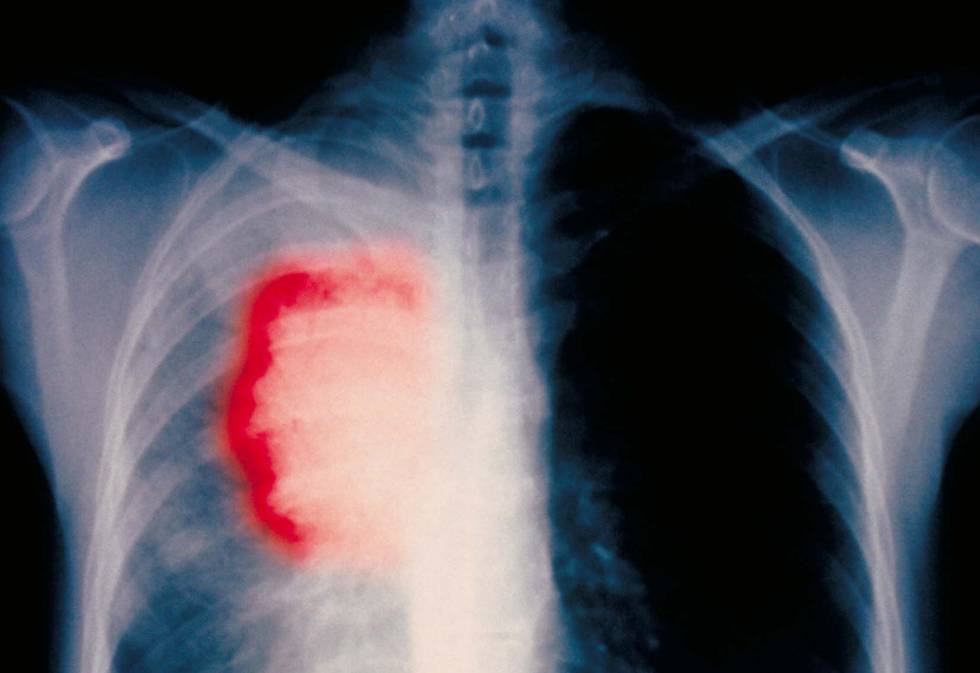
Radiografía de un paciente fumador de 58 años con cáncer de pulmón NUÑO DOMÍNGUEZ // Boston 11 MAR 2017 .

“El cáncer de pulmón es el que más gente mata en todo el mundo y la razón es que casi siempre lo diagnosticamos tarde”, explica en su despacho Avi Spira, neumólogo y director del Centro de Cáncer de la Universidad de Boston (EE UU). “Para cuando los pacientes tienen los primeros síntomas y vienen al médico, normalmente, el tumor se ha extendido fuera del pulmón y no hay nada que podamos hacer”, lamenta.

El 85% de los fumadores nunca desarrolla cáncer de pulmón, pero el 90% de los tumores se da en gente que fuma. Hay población predispuesta genéticamente.

Este tipo de cáncer mata cada año a más de millón y medio de personas, unas 21.000 en España, y la Organización Mundial de la Salud pronostica que su incidencia aumentará un 70% en las próximas dos décadas. Esta cruenta guerra afecta desproporcionadamente a los países en desarrollo. Para ganarla, es clave conseguir un buen método de diagnóstico temprano.

...

11 marzo 2017

Trump Ha Escogido a Scott Gottlieb, "" un Médico e Inversor "" Cercano a círculos conservadores y a la Industria Farmacéutica, para Dirigir la Agencia de Control de Alimentos y Medicamentos de Estados Unidos ( FDA ) .

P.J.: *.- Toda una Revolución que Permitira a los Farmacos salir antes al Mercado .

Resultado de imagen de pharma jonpi
*.- PharmaMar logicamente tambien deberia salir Beneficiada de ello.
*.- De tener exito sus Farmacos tambien saldrian antes al Mercado US y Paises Afines que se rigen por las deliberaciones de la FDA .
*.- Tambien podrian acortarse los plazos que Maneja actualmente la Compañia .
*.- Con lo cual se debería acelerar todo lo que compete con el Mercado US .

*.- Por Recordar los Farmacos de PharmaMar que estan en la Recta Final US ( Fase III ) :
         *Yondelis Ovario de la Mano de J&J .
         *Aplidin Myeloma de la Mano de PharmaMar .
         *PM01183 ( Lurbinectedin ) Ovario y Pulmón de la Mano de PharmaMar .

*.- Las Farmaceuticas disponian hasta ahora de muy pocos años para poder recuperar sus inversiones ya que debían repercutir en los precios del Farmacos todos los gastos realizados en la I+D antes de que les expirasen las Patentes .
*.- Si pueden salir antes al Mercado logicamente podran bajar los Precios de los Farmacos al diponer de más tiempo para amortizar los Gastos .
*.- Los Farmacos Genericos se quedan más o menos igual ya que No pueden salir al Mercado hasta que no expiran las Patentes de los Farmacos originales .
*.- Un Gran triunfo para las Farmaceuticas que estan por la Labor de I+D y sacar al Mercado Nuevos Farmacos .

********************************
La Noticia  :

Scott Gottlieb, Un Candidato menos radical que otros considerados, " Aboga por Aligerar la Regulación " ... según anunció este viernes la Casa Blanca. El nombramiento debe ser aprobado por el Senado.


JOAN FAUS /// Washington 11 MAR 2017 .


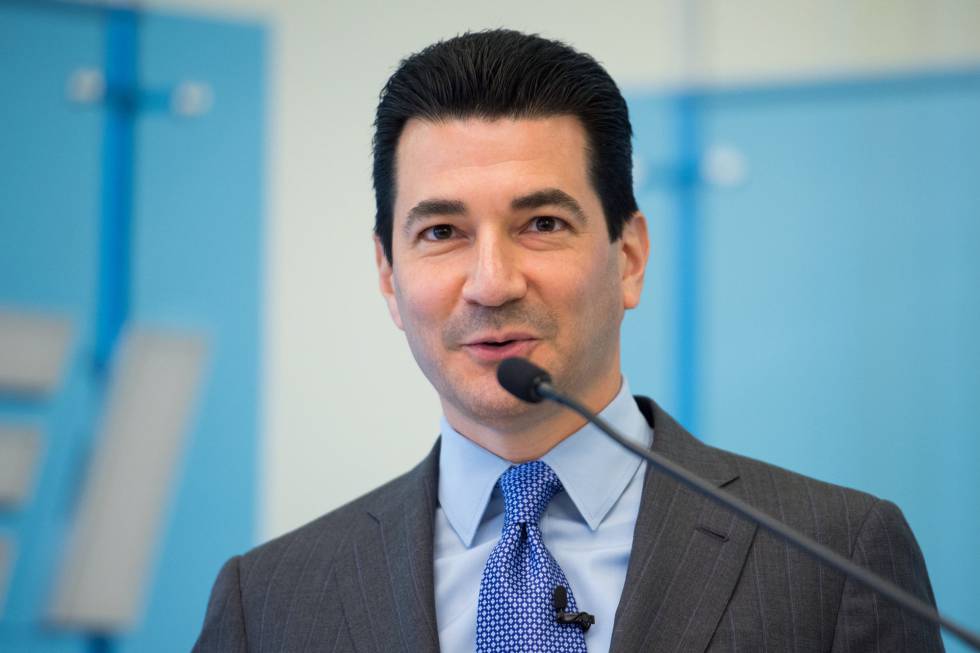
Scott Gottlieb, en un evento reciente
Gottlieb, como el presidente estadounidense, es partidario de aligerar la regulación de medicamentos, lo que puede tener consecuencias en todo el mundo e inquieta a las organizaciones de defensa de los consumidores. Pero su elección evita un viraje radical: Trump también consideraba para el cargo a Jim O’Neill, que ha abogado en el pasado por comercializar fármacos antes de que se demuestre si son efectivos.


Gottlieb, de 44 años, ya ocupó altos cargos en la FDA durante el Gobierno del republicano George W. Bush. Es socio del fondo de capital riesgo New Enterprise Associates, que tiene estrechos lazos con la industria farmacéutica y biotecnológica. Es analista del think tank conservador American Enterprise Institute y ha sido asesor de grupos farmacéuticos, como GlaxoSmithKline. Su cercanía a la industria será posiblemente objeto de escrutinio en su comparecencia de nominación en el Senado y ha sido criticada por entidades sociales.

Gottlieb, un superviviente de cáncer de linfoma, considera que la FDA tiene una regulación excesiva que afecta a la competencia y retrasa la aprobación de medicamentos genéricos. También ha criticado la opacidad del sistema de fijación de los precios de fármacos. El elevado coste de medicamentos en EE UU se ha consolidado en los últimos meses como un asunto de debate político.

Dos semanas antes de asumir la presidencia, Trump acusó a la industria farmacéutica de “librarse de asesinato” por el elevado coste de medicamentos y prometió cambiar el sistema para bajar los precios. “Somos el mayor comprador de fármacos en el mundo, pero no apostamos correctamente”, dijo. En sus primeros días en la Casa Blanca, el republicano se reunió con ejecutivos farmacéuticos y abogó por acelerar la aprobación de medicamentos.

Como en tantos otros ámbitos que ha prometido revolucionar, la incógnita es en qué acabará traduciéndose la promesa de Trump de cambiar el funcionamiento del sector farmacéutico.

Cáncer de Ovario . Médicos extraen un tumor de más de 60 kilos a una anciana de 71 años .

Fuente: GV con información de Telemundo 10-03-2017 .

Mary Clancey, una mujer de 71 años tenía un tumor en uno de sus ovarios de unos 63 kilos (140 libras), desde hace años, que equivalía a prácticamente la mitad de su peso, pues, pues entró al quirófano pesando 165 kilos, y al salir había perdido 81 kilos, entre tumor y tejido.

El 10 de noviembre, los médicos en Lehigh Valley Health Network, en Allentown, Pensilvania, retiraron la masa cancerosa de etapa 1 en una operación que duró cinco horas.

"Ni en los sueños más alocados uno puede imaginarse algo así de enorme", dijo la anciana a la televisora local NBC10.

Cuando comenzó a subir de peso, los médicos sólo le decían que vigilara lo que comía, y después de más de 15 años de hacer dieta, Mary se había resignado a ser una anciana con un vientre enorme.

El tumor en realidad no le causaba dolor "solo me hacía sentir incomodidad ahí", dijo ella, pero para cuando fue al hospital, ya tenía dificultades para caminar o estar de pie.

...

10 marzo 2017

En Pharma Mar Aún Hay Esperanza .

By : Invertir y Especular 8 Marzo 2017.


Imaginamos la cólera de los inversores de esta acción, los tiene que tener totalmente hartos a los que van a medio y largo plazo, mucha inversión mucha buena noticia puntual pero a ellos no les llega ni las migajas y claro como muchos están tan pillados pues no pueden ni irse de la serie.

 La última decepción fue no poder ni con la resistencia de los 3 euros y no solo eso sino con el agravante de ver a un IBEX por encima de 9600 puntos rumbo a 10.000 y la acción apoyando en 2.6 casi.

En fin para no ser negativos se observa rotura de directriz bajista y apoyo tras corrección en la misma mientras esté por encima de 2.6 no habría que temer un nuevo deterioro. pero si no supera los 3 euros tampoco se puede esperar nada de ella.

...

Cáncer de Tiroides . Los médicos saben que esta mujer tiene cáncer solo con mirar su foto .

Foto: Lorna Nockson Brown. (Facebook)La señal de una grave enfermedad puede ser tan clara que por eso mismo no la conseguimos percibir. ¿Ves algo extraño en la chica de esta imagen? .

08.03.2017 .

“Mi madre me notó un bulto en el lado izquierdo de mi cuello. Creía que había perdido algo de peso. Tres meses más tarde visité al médico de cabecera, que me diagnosticó un nódulo tiroideo”. Así comienza esta particular historia de la actriz y productora Lorna Nockson Brown, de 26 años, quien fue operada de cáncer de tiroides hace un par de años, tras la aparición de una protuberancia en el lado izquierdo de su garganta.

Los nódulos tiroideos suelen ser bastante comunes y normalmente son de naturaleza benigna. Su aparición se incrementa con la edad y el 90% de los casos corresponden a mujeres mayores de 60 años. Solo entre el 4 y el 8% de los nódulos derivan en un tumor maligno.

No sabía ni siquiera lo que era la glándula tiroides hasta que me dijeron que tenía un cáncer. Ahora lo sé todo
En el caso de Lorna, el nódulo era más grande de lo normal y resultaba demasiado duro al tacto, así que decidieron tratarlo. Cuenta la joven al diario 'Independent': “No pensaba que el cáncer tuviera este aspecto”, Lorna admite que tampoco se sentía mal en aquel momento.

Tras obtener una muestra del nódulo a través de una biopsia, los resultados determinaron que, efectivamente, se trataba de un cáncer. Repasando las fotos realizadas con anterioridad a la extracción, el bulto estaba tan a la vista que quizás por eso mismo a nadie le resultaba tan evidente.

...

Evo Morales tiene tumor en la garganta: "Dolor es insoportable" .

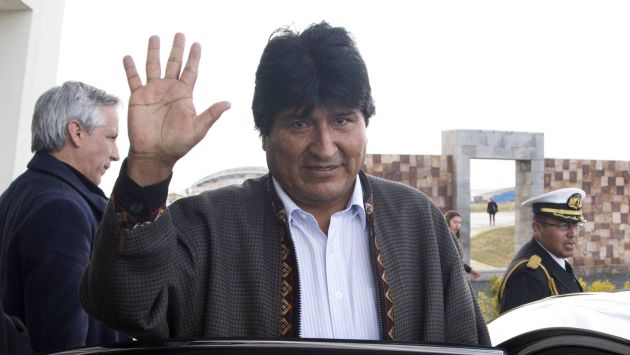
Evo Morales padece por un tumor en la garganta (Foto: AP)Miércoles 08 de marzo del 2017 .

Tras días de incertidumbre, Evo Morales confirmó que el nódulo de su garganta es benigno.

El presidente de Bolivia, Evo Morales, estuvo internado en Cuba para tratarse un nódulo en la garganta. El tumor benigno deberá ser extirpado mediante una intervención quirúrgica en un mes.

Morales reveló este miércoles que el “dolor es insoportable” y no lo dejaba dormir, por lo que buscó atención médica en Cuba.

“Soy medio duro, pero por primera vez tuve un problema muy serio de salud”, dijo el mandatario en un discurso en la entrega de una escuela en El Alto, ciudad vecina de La Paz.

En medio del malestar de garganta y pecho, “no podía entender cómo en mi vida podía tener un dolor que en algún momento fue insoportable. Dos o tres noches no podía dormir, nunca me había pasado eso”, confió.

Evo Morales confirmó que el tumor benigno en su laringe será extirpado en La Habana.

...

09 marzo 2017

Yondelis Combinado con Avelumab ( Anticuerpo de Pfizer / Merck ) van a Iniciar Fase I-II de la Mano del National Cancer Institute EEUU (NCI) como Colaborador y como Sponsor el Fred Hutchinson Cancer Research Center .

Sponsor : Fred Hutchinson Cancer Research Center.


Collaborator National Cancer Institute (NCI).


ClinicalTrials Identifier: NCT03074318
Updated: 2017_03_07 .

Descriptive Information
Brief title
Avelumab and Trabectedin in Treating Patients With Liposarcoma or Leiomyosarcoma That is Metastatic or Cannot Be Removed by Surgery .

Official title
A Phase I/II Trial Combining Avelumab and Trabectedin for Advanced Liposarcoma and Leiomyosarcoma .

Brief summary
This phase I/II studies the side effects of avelumab and trabectedin and how well they work in treating patients with leiomyosarcoma or liposarcoma that has spread to other places in the body or cannot be removed by surgery. Monoclonal antibodies, such as avelumab, may block tumor growth in different ways by targeting certain cells. Drugs used in chemotherapy, such as trabectedin, work in different ways to stop the growth of tumor cells, either by killing the cells, by stopping them from dividing, or by stopping them from spreading. Giving avelumab and trabectedin may work better in treating patients with liposarcoma or leiomyosarcoma.

...

08 marzo 2017

PM01183 . PharmaMar Starts Talks on U.S. Development Deal for Cancer Drug .

By Manuel Baigorri and Thomas Gualtieri (Bloomberg) .

Resultado de imagen de bloomberg*.- Pharma Mar Starts Talks on U.S. Development Deal for Cancer Drug .

*.- Partnership said potentially valued in hundreds of millions .

*.- Pharma Mar looking to replicate accord with Chugai in Japan .

Pharma Mar SA, a Spanish drugmaker that develops cancer medicines from sea creatures, is working on a partnership for an experimental treatment for tumors in the U.S.

The company has started negotiations in the U.S. and is speaking to financial advisers about its options, a spokesman said on Wednesday.

An agreement for the experimental drug, known as PM1183, could fetch several hundred million dollars for Pharma Mar in an upfront payment and royalties tied to performance goals, people familiar with the discussions said, asking not to be identified because the deliberations are private. The deal under consideration would be to jointly develop, distribute and ultimately sell the drug, they said.

Pharma Mar reached a similar accord for the drug with Japan’s Chugai Pharmaceutical Co. last year. Under that agreement, Pharma Mar will receive an initial payment of 30 million euros and double-digit royalties. It could also get more than 100 million euros from Chugai if certain goals on clinical development and sales are met.

The drug’s next step is a move into the U.S. with a partner to create a network to market PM1183, Luis Mora, managing director of Pharma Mar’s oncology department, said in an interview last month. A presence there will also increase the firm’s visibility and make it easier to carry out an initial public offering on the Nasdaq in the future, he said.

PHM SM Equity // Graphic Dashboard» .

Ticker relacionado: PHM SM (Pharma Mar SA) .


Streptenols F-I Isolated from the Marine-Derived Streptomyces misionensis BAT-10-03-023.

PharmaMar I+D .


Journal of Natural Products .


Copyright © 2017 The American Chemical Society and American Society of Pharmacognosy . Publication Date (Web): February 23, 2017 .

Tarazona G, Schleissner C, Rodríguez P, Pérez M, Cañedo LM, Cuevas C.

Author information : Research & Development Department, PharmaMar S. A. , Pol. Ind. La Mina Norte, Avenida de los Reyes 1, 28770, Colmenar Viejo, Madrid, Spain.


Abstract :


Abstract Image
A Marine-Derived Bacterium, Streptomyces Misionensis BAT-10-03-123, has produced four new streptenol derivatives, F, G, H, and I (1-4), as well as the known streptenols A and C (5 and 6).

Their planar structures were elucidated by detailed analysis of spectroscopic data. 

The absolute configurations of the new streptenol compounds were determined by chemical and spectroscopic methods, including Mosher's ester method. 

All of the compounds were tested for cytotoxicity against four selected cancer cell lines.
PMID: 28230357 DOI: 10.1021/acs.jnatprod.6b01057

07 marzo 2017

PharmaMar Nació en un Garaje situado en Tres Cantos ... " Ellos Si Pudieron " .

"Ellos Sí Pudieron": Julio Ariza Entrevista a José Mª Fernández Sousa, Catedrático de Bioquímica.
Publicado el 7 mar. 2017 .

Imagen relacionada
*.- PharmaMar empezó con 40 Chalados y a fecha de hoy son más de 430 ( Cientificos , Biologos , Submarinistas ... ) y se ha convertido en una Empresa Internacional y Respetada por el resto de Farmaceuticas .


*.- Ha Pasado y continua Pasando todas las inspecciones de la FDA , EMA ... y tiene permiso de todas ellas para Fabricar Yondelis , Aplidin y el PM01183 .

*.- La Red de Ventas Europea de PharmaMar esta en condiciones de poder vender productos de otras Farmas ... de US , Japón ...

*.- PharmaMar ha alcanzado Acuerdos con 7 Comapñias .

*.- Del Yondelis salieron 1000 Analogos para ver si se podía conseguir un Farmaco " Mejor " y uno de esos 1000 Analogos era el PM01183 ... y por descontado que esta demostrando ser muchisimo mejor que el Yondelis . Se puede administrar en Mayor Dosis y su Tolerancia tambien es mejor que la de Yondelis ... de hecho PM01183 esta respondiendo en Pacientes con unos tipos de Tumor en los que Yondelis no Respondia .


*.- Un Tumor puede hacerse resistente y mutar . Si lo Tratamos con un solo farmaco ... el Tumor intentara sortear los efectos de dicho Farmaco ... si lo Tratamos con la combinación de dos farmacos el Tumor ya no lo tiene tan facil ... y ya con una cuadriple combinacion el tratamiento podría ser más efectivo ... en definitiva tendriamos una nueva arma contra el Cáncer ... Aplidin es uno de los elegidos para realizar un ensayo en Combinación Quadruple .

Resultado de imagen de pharmamar
*.- PM01183 Esta de Momento Centrado en 4 Indicaciones :


  * Cáncer de Pulmón de Celulas Pequeñas en segunda linea en donde a fecha de hoy tan solo existe un Farmaco en el mercado y ya tiene 20 años desde que fue Aprobado ( Topotecan ) . Ya en la Recta Final de la Fase III ... a Finales de año ya con los Resultados se elaborara el Correspondiente Dossier .
    * Cáncer de Ovario Resistente Ya en Fase III .
    * Cáncer de Mama Hereditario que empezara la Fase III este año.
    * La cuarta Indicación se comunicara en cuanto sea Factible .


*.- EEUU es el Mayor Mercado Mundial Oncologico con un 43 % de cuota en donde Los Farmacos acostumbran a Venderse a el doble de Precio que en Europa ... de hecho J&J Vende el Yondelis el doble más caro en EEUU del que vende PharmaMar en Europa .

*.- Es por ello que desde PharmaMar se ha Fichado a Pascal Besman para llevar a cabo todas las Operaciones y Diligencias en EEUU y Crear una Red de Ventas Propia para poder Vender el PM01183 en ese Pais sin tener que Licenciarselo a nadie .
*.- A Fianles de este 2017 se sabran los Resultados de Fase III del PM01183 en Cáncer de Ovario ... de ser Buenos ... PharmaMar pasaría a otra Dimensión .

*.- PharmaMar al realizar la I+D enfocada en el mar y no tener practicamente competencia ... le son concedidas todas las Patentes que solicita ... y ya tienen más de 1000 Patentes para sus productos .

*.- PharmaMar no ha Recibido ninguna oferta de Compra ... ni Ganas ya que a fecha de hoy esta muy muy Infravalorada . Aqui los Necios continuan confundiendo Valor con Precio .

*.- PharmaMar puede decir que el PM01183 es Buenisimo y tal y tal ... pero ha sido CHUGAI ( ROCHE ) que por cierto es la Mayor Farmaceutica de Japón , la que le ha puesto Valor y Precio al Pagar a PharmaMar 30 Millones de una Tacada ... y a parte hay unos Hitos a alcanzar que de conseguirlos se irian ingresando montos hasta un total de 100 Millones Más ... o sea que el Monto final podría ser de 130 Millones los que Pagaría CHUGAI solo por Japón que por cierto representa solo un 10 % del Mercado Oncologico Muindial ... si esos 130 Millones los extrapolamos al 90 % restante del Mercado ... situan al PM01183 con un Valor de más de 1000 Millones .

*.- Otros 1000 Millones de Valor los esta dando Yondelis . Yondelis el año pasado obtuvo 55 Millones de euros NETOS por las ventas en Europa .... Por ejemplo si tuvieramos 1000 Millones y los pusieramos al 5 % pues al año nos daria 50 / 55 Millones de beneficios ... pues con este ejemplo tenemos el valor del Yondelis en Europa solo ... 1000 Millones .


Resultado de imagen de pharmamar*.- Si cojemos los 1000 Millones de valor del PM01183 y los 1000 Millones de valor del Yondelis tenemos 2000 Millones que si los dividimnos por las aciones que tiene PharmaMar nos da que cada acción valdría 9 EUROS ... contando solo con el valor del PM01183 y del Yondelis Europa .

Resultado de imagen de pharmamar*.- En España practicamente no se invierte nada en I+D ...

 " Si No Inviertes en Futuro ... No Tienes Futuro " .

...


Lurbinectedin ( PM01183 ) Exemplifies a Prototypical Drug for Targeting Transcriptional Dependency in Tumor Cells and, Thus, it Could Represent a New Therapeutic Alternative for Solid Tumors with This Addiction. Del 6 al 8 Marzo en el 15th International Congress on Targeted Anticancer Therapies ( Paris ) .

O10.4 Lurbinectedin Inhibits Active Transcription Affecting Tumor cell Burden and its Inflammatory Microenvironment .


*.- Carlos Galmarini, PharmaMar, Madrid, Spain .
*.- Jean-Marc Egly, IGBMC, CNRS, INSERM, University of Strasbourg, Strasbourg, France .

*.- Institute Humanitas, Milan, Italy .
*.- Istituto di Ricerche Farmacologiche Mario Negri, Milan, Italy .


Cancer cells are characterized by their relentless need for active transcription, which reaches the level of real addiction in solid tumors such as small cell lung cancer or triple-negative breast cancer. 

Pharmacological modulation of transcription may thus provide a therapeutic approach to treat tumor types that depend on deregulated transcription for the maintenance of their oncogenic state.

 Lurbinectedin (PM1183) is a new synthetic compound from the tetrahydroisoquinoline family, which has demonstrated strong anti-proliferative activity against a panel of human tumor models in preclinical assays and is currently being evaluated in phase III clinical trials in platinum-resistant ovarian cancer and small-cell lung cancer. In this work we demonstrate that lurbinectedin inhibits the transcription process through (1) its binding to CG rich sequences, mainly located around promoters of protein coding genes; (2) the irreversible stalling of elongating RNA polymerase II (Pol II) on the DNA template and its specific degradation by the ubiquitin/proteasome machinery and (3) the generation of DNA breaks and subsequent apoptosis. 

The finding that inhibition of Pol II phosphorylation prevents its degradation and the formation of DNA breaks after drug treatment underscores the connection between transcription elongation and DNA repair. 

Resultado de imagen de lurbinectedinCombined with this intrinsic activity against cancer cells, lurbinectedin also has the ability to modulate active transcription in the inflammatory tumor microenvironment with a specific focus on myeloid cells.
 Besides its direct effect on tumor-associated macrophages, lurbinectedin also inhibited the production of inflammatory/trophic mediators (e.g. CCL2, CXCL8 and VEGF) by mononuclear phagocytes. Altogether, our results help to better understand the high specificity of this drug in cancer therapy. 

In summary, lurbinectedin exemplifies a prototypical drug for targeting transcriptional dependency in tumor cells and, thus, it could represent a new therapeutic alternative for solid tumors with this addiction.

Nasdaq . La Farmaceutica TG Therapeutics " DOBLA SU VALOR EN CUESTIÖN DE DOS HORAS " después de anunciar sus avances en un medicamento contra la leucemia linfocítica crónica (LLC). ( By Diego 50 ) .

EL ECONOMISTA.ES . 6/03/2017 .

Resultado de imagen de TG Therapeutics

Sus avances contra la Leucemia Linfocítica Crónica Duplican su Valor .

 El Viernes cotizaba a 5,35 $$  y ayer cerró en los 10,20 $$ .


Tras los buenos resultados en la Fase 3 de desarrollo del medicamento, esperan que las autoridades sanitarias den el visto bueno para su comercialización a finales de este año.
Así, la compañía se ha disparado en bolsa llegando a doblar su valor con respecto al cierre del pasado viernes. Dos horas después de la apertura de la sesión este lunes la compañía se movía en torno al 90% de crecimiento de sus títulos, hasta los 10,10 dólares por acción.
"Creemos que los resultados observados son muy convincentes y el régimen tiene el potencial de convertirse en un estándar para el tratamiento de pacientes con alto riesgo de LLC que han progresado desde otras terapias", dijo el CEO y presidente ejecutivo de la compañía, Michael Weiss.

Obesidad puede causar 11 tipos de Cáncer ... principalmente del sistema digestivo y de origen hormonal .

El cáncer podría empezar a detectarse con un análisis de sangre .

06 marzo 2017

Protoxenicins A and B, Cytotoxic Long-Chain Acylated Xenicanes from the Soft Coral Protodendron repens.

Medicinal Chemistry Department, PharmaMar S. A. , Pol. Ind. La Mina Norte, Avenida de los Reyes 1, 28770, Colmenar Viejo (Madrid), Spain.

Departamento de Química Fundamental, Facultade de Ciencias e Centro de Investigacións Científicas Avanzadas (CICA), Universidade da Coruña , 15071 A Coruña, Spain.

J Nat Prod. 2017 Mar 3 .

Abstract Image

Urda C, Fernández R, Pérez M, Rodríguez J, Jiménez C, Cuevas C.

Abstract

Two new xenicanes, named protoxenicins A (1) and B (2), were isolated from an organic extract of the soft coral Protodendron repens, collected off the coast of Okuza (Tanzania), being the first chemical study of an organism belonging to this genus.

 Their planar structures were determined by 1D and 2D NMR and HRESIMS techniques, while the relative configurations were elucidated by comparison of their chemical shifts and coupling constants with the literature values of their congeners, as well as by ROESY experiments, chemical derivatization, and molecular mechanics calculations. 

This is the first report of a xenicin acylated with a long saturated fatty acid. 

Furthermore, the absolute configuration of the stereogenic centers of the cyclononane ring and at C-1 in 1 was determined by Mosher's method.

 Protoxenicin B (2) is present in solution as a mixture of two conformers in a 2:1 ratio deduced by1H NMR. 

Both xenicanes display significant cytotoxic activity against a panel of different tumor cell lines.

PharmaMar SI es Valorada en EEUU //// El Nuevo Farmaco que iniciara Fase I este año ... " Es MEJOR que el PM01183 " //// 2017 para Empezar viene ya con un BENEFICIO de 24 MILLONES de euros ( CHUGAI ) . ( J.Mª.F.S ) .

“El Compuesto PM1183 hará Despegar a PharmaMar a Nivel Internacional”

José Mª Fernández Sousa-Faro, presidente de PharmaMar .

MARTA RIESGO // Madrid // 3 Marzo 2017  /// ElGlobal.net .
A pesar de la reducción en beneficios registrada en 2016, el presidente de PharmaMar, José María Fernández Sousa-Faro, tiene claro que la compañía tiene un futuro prometedor, con su compuesto PM1183 como protagonista.

Pregunta. En 2016 PharmaMar ha registrado pérdidas en beneficio pero aumento en ventas, ¿Cómo valora estos resultados?
Respuesta. Las pérdidas en beneficios se explican con la aplicación de la nueva normativa de reconocimiento de ingresos al acuerdo de licencia con Chugai. Hemos recibido en caja un ingreso de 30 millones de euros como pago inicial, de los cuales solo se contabilizaron 6 millones al cierre de 2016. Pero ya comenzamos 2017 en nuestra caja con 24 millones de beneficios. Además, hemos batido récord de inversión en I+D, porque podemos hacerlo y porque confiamos mucho en nuestro compuesto PM1183.
P. ¿Y qué espera para este 2017?
R. Los próximos meses los vemos con mucho optimismo, confiados en los avances del PM1183. De hecho, en el segundo semestre tendremos los resultados del ensayo de cáncer de ovario. Además, en la segunda mitad del año esperamos noticias sobre la posible aprobación de Aplidin.
P. Entonces, se puede decir que el PM1183 impulsará a la compañía, ¿no?
R. Sí. Este fármaco es el que hará despegar a la compañía a nivel internacional.
P. ¿Se plantean asumir la comercialización en solitario de este compuesto en EE.UU?
R. Podremos hacerlo solos o acompañados. Pero si lo hacemos acompañados tendrá que ser con una muy buena oferta. Nuestra intención es crear una red de ventas propia, porque nos lo podemos permitir.
P. Si Donald Trump cumple su promesa y aplica una tasa a la producción en el extranjero, ¿producirían en Estados Unidos?
R. Podríamos vializar en Estados Unidos sin problema. Actualmente producimos en España la materia prima para Yondelis y la vializamos fuera; en Bélgica y Alemania. No estamos cerrados a hacer lo mismo en Estados Unidos.
Resultado de imagen de JOSE MARIA FERNANDEZ SOUSAP. Para este 2017 también tienen prevista la introducción de un nuevo compuesto en su pipeline, ¿no?
R. Sí; ya tenemos todos los estudios en animales y es de lo mejor que viene. Esperamos que sea mejor que el PM1183. No podemos adelantar aún para qué tumores puede estar indicado pero en marzo tenemos una reunión con los investigadores para ver cómo orientamos la I+D. Además, ahora no somos inexpertos y ya sabemos como funcionar.
P. Parece que el valor bursátil de la compañía no acaba de estabilizarse, ¿a qué se debe?
R. Es inexplicable que la acción esté situada en estos precios. El año pasado nuestra acción estuvo muy inestable aunque hay que tener en cuenta que el sector biotech mostró mucha inestabilidad. Sin embargo, desde las elecciones en Estados Unidos parece que estas compañías están recuperando el crecimiento, y esperamos que esta onda nos llegue.
P. ¿Cree que no se entiende el valor de la compañía?
R. A nosotros donde nos entienden bien es en Estados Unidos. Allí hay 168 compañías en el biotech Index; de esas 150 tienen un Ebitda negativo. Y es que allí se valora la inversión en I+D. Así, compañías que no tienen aún productos comercializados obtienen una capitalización de mercado de 2.000 millones y alguna de casi 10.000 millones, a pesar de las pérdidas.
P. ¿Estarían abiertos a una posible compra por parte de una gran farmacéutica?
R. Lo llevaríamos al consejo, pero ahora mismo no está entre nuestras posibilidades. Sin embargo, hay quien dice que nos machacan la acción para mantenernos baratos. Es muy raro. Actualmente sólo tenemos un 1 por ciento de bajistas.

De ese 1 por ciento, el 0,82 por ciento pertenece al Fondo Wellington, que en sus estatutos no incluye el estar a la baja. 

En cuanto hay gente que quiere comprar , salen de cara con 70.000 títulos como si quisieran asustar. Un patrón que se produce en nuestra acción es que sube pero, de repente, tiran. No nos vamos a poner paranoicos, pero si alguien quiere tener al accionista aburrido para luego hacer una oferta...
P. El debate de los precios está sobre la mesa de todos los gobiernos. ¿Cual cree que debería ser la solución?
R. Debería existir una armonización a nivel global para analizar lo que está pasando. Actualmente la administración quiere asumir riesgo cero, y va cambiando las reglas y eso alarga la entrada en el mercado, reduciendo el tiempo para recuperar la inversión hasta la expiración de la patente. La solución creo que está en la mano de la administración. Por ejemplo, una solución es que a la compañía que reduzca su precio de forma notable se le amplíe la patente, para que pueda recuperar la inversión. Pero esa no es la intención porque piensan en el genérico y en que cuando llegue bajarán el precio.
P. ¿Y apostar por las compras centralizadas?
R. Es que si seguimos en esta actitud no van a existir productos innovadores en el futuro, porque alguien tiene que invertir para desarrollar producto. Si no te van a pagar lo suficiente para recuperar la inversión será imposible. Además, no tienes asegurada la aprobación de las agencias, lo que aumenta el riesgo. En 2003 la EMA no nos aprobó Yondelis para sarcoma de tejido blando por un formalismo absurdo, probablemente por la interferencia de alguna compañía farmacéutica. Pero el tiempo nos ha dado la razón y al final hemos obtenido la aprobación. Por ejemplo, Donald Trump ha pedido que la FDA justifique por qué se rechaza la aprobación de un fármaco.